














Azienda
16 October 2026
 11:25
11:25 A worn or mismatched door roller can make a good sliding door noisy, stiff, and unstable. If buyers choose only by appearance, repeated repairs and customer complaints may follow. The solution is to match the wheel, housing, bearing, adjustment method, track, and operating load as one complete system.
A suitable sliding door roller must fit the door profile, track shape, wheel diameter, installation space, and expected load. For replacement work, match the original housing and adjustment points. For new production, test the complete roller assembly in the actual door system. Material, bearing design, corrosion protection, and OEM consistency also affect long-term performance.
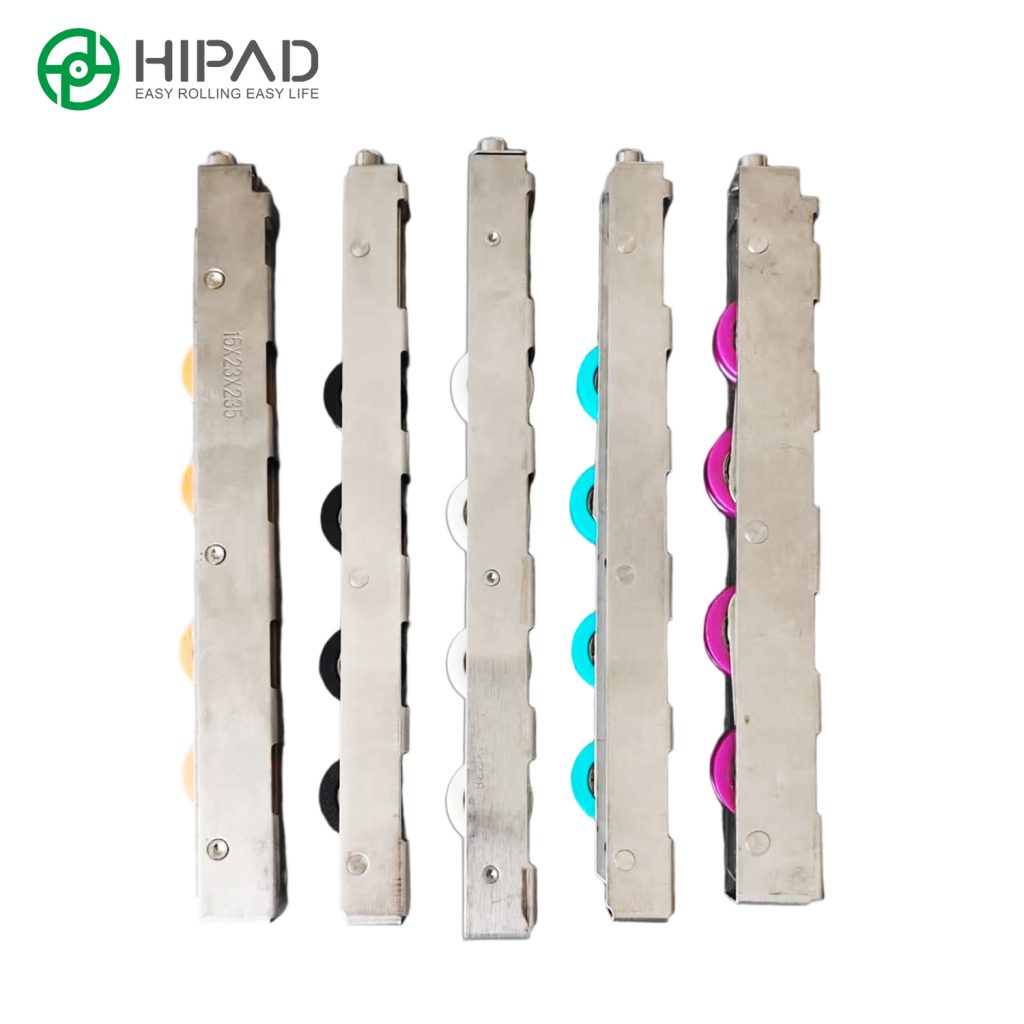
A door roller carries the moving panel and guides it along the track. Although it is small, it directly affects opening force, noise, alignment, and stability. A well-matched wheel for smooth operation helps the panel glide smoothly and quietly. A poorly matched wheel may drag, jump, tilt, or damage the track.
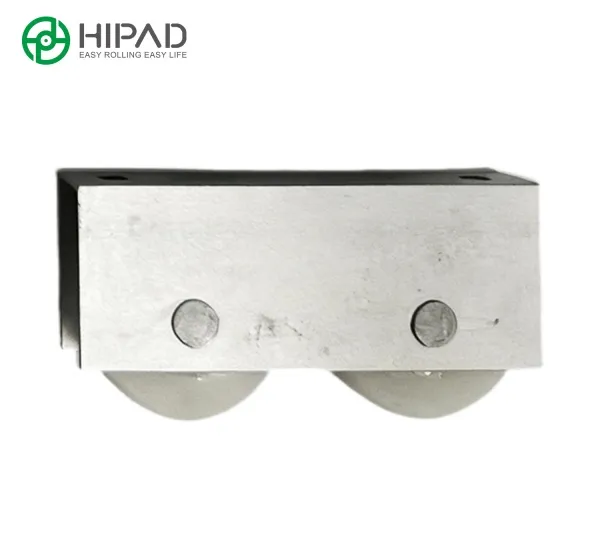
The complete roller assembly matters more than the wheel alone. It may include the wheel, axle, precision bearing, bracket, steel housing, adjustment screw, and mounting points. Each part must fit the aluminum or steel profile. The bottom roller assembly must also keep the panel at the correct height so that locks, handles, and seals remain aligned.
For manufacturers, the roller is part of a system—not an isolated replacement part. At HIPAD, we manufacture hardware solutions for aluminum doors, sliding windows, wardrobes, glass partitions, and commercial sliding structures. Our product development starts with the profile, track, panel weight, installation space, and target market rather than a generic wheel selection.

Several designs may look similar in a catalog but serve different systems. The table below summarizes common configurations. Final dimensions and performance requirements must be confirmed against the buyer’s drawing or physical sample.
| Roller Type | Typical Application | Main Characteristic | Key Point to Confirm |
| Single-wheel assembly | Lightweight doors and windows | Compact structure | Wheel position and housing size |
| Tandem roller assembly | Larger | Single-wheel assembly | Lightweight doors and windows |
| Tandem roller assembly | Larger sliding panels | Two wheels share the running load | Wheel spacing and adjustment method |
| Rullo regolabile | Aluminum sliding systems | Height can be corrected during installation | Adjustment direction and screw access |
| Embedded roller | Slim door or window profiles | Housing sits inside the profile | Cavity dimensions and mounting position |
| Hanging or bracket roller | Top-hung and special systems | Supports the panel from above | Bracket geometry and track interface |
| Replacement roller | Existing door repair | Matches an installed component | Original housing, axle, wheel, and holes |
A single-wheel door roller assembly suits compact systems where space is limited. A tandem design can distribute the load across two contact points. Some buyers search for an inch tandem, an end adjust tandem, or a door tandem configuration. Those terms are useful, but the exact housing and wheel positions still decide whether the part fits.
A porta scorrevole roller assembly may be fixed or adjustable. An adjustable sliding mechanism allows installers to raise or lower the panel after installation. This feature can correct minor track or frame variation, but it cannot compensate for the wrong housing dimensions or an unsuitable track roller.
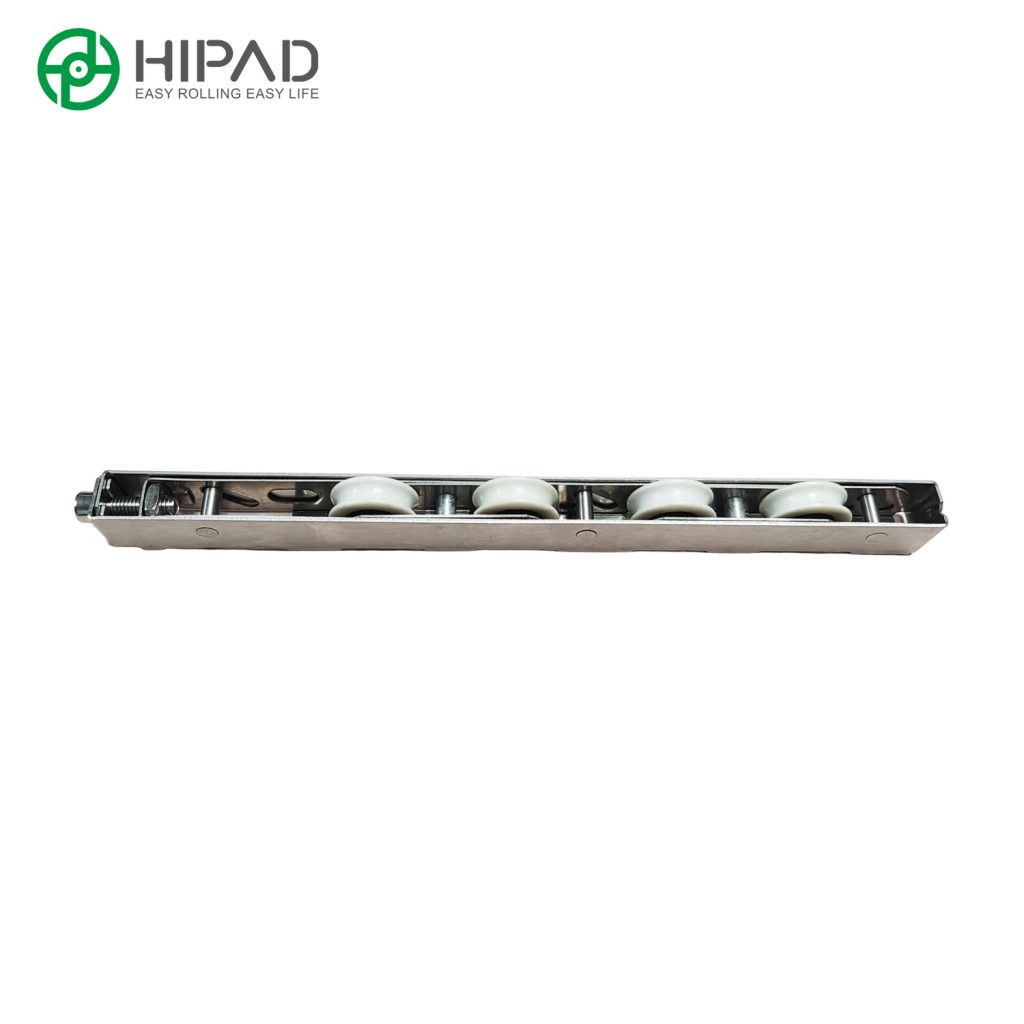
Wheel material influences noise, wear, corrosion behavior, and track contact. A nylon wheel can provide quiet travel in many residential systems. POM and PU are also used in roller products where buyers need different combinations of wear resistance and noise control. Metal options may suit systems that require a stronger or more rigid running surface.
| Wheel Option | Typical Buying Priority | Questions to Ask |
| Nylon or POM | Low noise and smooth movement | Is the track surface compatible with the polymer? |
| PU | Controlled contact and reduced vibration | What operating environment and track shape will be used? |
| Steel wheel | Rigid running surface | Is the track designed for metal-to-metal contact? |
| Stainless steel wheel | Corrosion-conscious system design | Is the complete assembly protected, not only the wheel? |
A steel wheel should not be selected simply because it appears stronger. It can create more noise or accelerate track wear if the track material and groove do not match. Likewise, durable stainless steel does not automatically make the whole component suitable for wet conditions. The axle, bearing, fasteners, finish, and housing must be reviewed together.
The wheel profile is equally important. A flat wheel needs a flat running surface, while a concave wheel is designed to locate on a matching rounded track. It is important to match the groove, track width, and wheel diameter. Even a high-quality wheel roller assembly will perform poorly on the wrong track geometry.
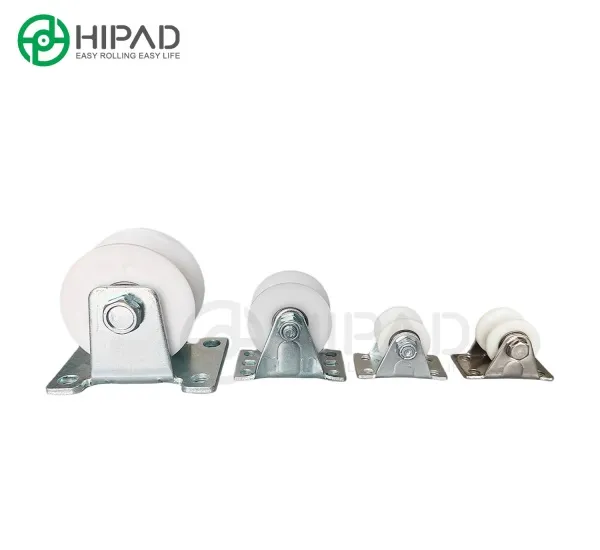
A tandem roller uses two wheels within one housing. By spreading contact across two wheels, it can improve stability in suitable patio and commercial door designs. Buyers often search for a tandem roller for sliding glass systems or a tandem steel ball bearing roller when replacing an older component.
However, two wheels do not automatically mean that a part is heavy duty. The axle, bearing, housing thickness, mounting points, wheel material, and track all affect the result. A heavy duty sliding door also requires a frame and track that can support the intended panel. The correct choice should come from system testing, not from a broad product label.
Terms such as steel ball bearing roller assembly, steel roller assembly with ball bearing, and roller assembly with ball bearing describe only part of the construction. Before approving a design, ask for the wheel spacing, overall housing dimensions, adjustment range, mounting method, and verified system requirement. This prevents a heavy-duty component from being installed in an incompatible lightweight profile.
Choosing the right sliding component begins with accurate measurements. If you plan to remove the door, support the panel safely and follow the door manufacturer’s procedure. After removal, record the complete existing assembly rather than measuring only the visible wheel.
Measure or confirm:
A patio door roller can resemble many catalog products but still differ by a few critical millimeters. For a patio glass door, the wrong axle height may cause the sash to rub or prevent the lock from aligning. For this reason, the right replacement part should be checked against a drawing, a clear dimensioned photo, or an original sample.
When comparing patio door roller assemblies, do not rely only on retail labels such as Prime-Line references or broad “rollers patio” search results. These may help identify a familiar style, but a professional supplier must still verify the actual assembly. A sliding patio door roller assembly should match the profile and track used by the door manufacturer.
A sliding patio door often uses a bottom-supported system designed for a larger glazed panel. The sliding patio application therefore needs stable alignment, an appropriate bearing structure, and an adjustment method accessible from the door edge. A sliding patio door roller must also fit the frame cavity without interfering with drainage, seals, or locking hardware.
A sliding screen door is usually lighter. Its rollers may be smaller and its housing more compact. Sliding screen door rollers must still match the track profile, spring or adjustment arrangement, and mounting position. Search phrases such as “screen door rollers with 1 inch wheel” are not enough unless the housing and axle geometry are also confirmed. Different screen doors can use very different parts.
Closet doors, a bi-fold door, and a shower door introduce other requirements. Closet doors often prioritize quiet movement and compact installation. A shower application needs materials and finishes selected for a wet environment. Glass door rollers used in bathroom systems must be matched with the glass layout, holes, fittings, stops, and support structure. One roller for sliding glass doors cannot be treated as universal across all these systems.
The bearing allows the wheel to rotate around its axle with controlled friction. A ball bearing can support smooth rotation when its size, seal, fit, and operating requirement are appropriate. A steel ball bearing does not solve poor alignment, an incorrect track, or a weak bracket. The full assembly must keep the wheel square to the direction of travel.
Housing design controls how the wheel sits inside the door. Some replacement descriptions use terms such as ball bearing and plain back or bearing and plain back housing. These details can help distinguish parts, but buyers should compare the complete drawing. A plain back, side tab, mounting flange, or heavy duty side plate can change installation compatibility.
An adjustable mechanism helps set panel height and correct alignment during installation. An adjustable roller is especially useful when the door must align with a lock or adjacent fixed panel. Yet adjustment range is limited. If the housing is too tall, the wheel is off-center, or the bracket is wrong, turning the screw will not restore smooth operation.
A professional evaluation should test the component inside the intended system. At HIPAD, the inspection focus published for our roller range includes raw-material and dimensional control, rolling and bearing checks, surface inspection, bracket strength, and final functional inspection. Compatibility with the target sliding track should also be confirmed before mass production.
Useful checks include:
New rollers can make a worn door feel better, but rollers cannot correct a bent track or distorted frame. The manufacturer should separate component failure from system damage. This makes door repair more reliable and reduces repeated replacement.
For a distributor or door manufacturer, the right roller is only part of the purchase. Consistent repeat production is equally important. A supplier should be able to control the mold, wheel, bearing, housing, bracket, assembly, inspection, and packaging. This reduces variation between samples and later production batches.
HIPAD has more than 25 years of manufacturing experience, more than 60 injection molding machines, and over 2,000 mold sets. We support OEM and ODM production from drawing review and mold development to sample prototyping and mass production. Our roller range includes options for aluminum sliding doors, windows, wardrobes, glass systems, and commercial structures. Exact materials, sizes, and load requirements should be confirmed for each project.
Even the correct roller for sliding doors needs proper installation. Clean the track before fitting the new assembly. Check for dents, loose fasteners, debris, or corrosion. Install the component squarely and use the intended adjustment point. Raise the panel gradually and keep both sides balanced.
After installation, move the door through its full travel. It should not scrape, rock, or bind. Confirm smooth door operation before final tightening. Do not over-adjust the panel, because too much height may affect engagement with the upper guide or lock. Easy installation depends on correct preparation, not only on the roller features.
Maintenance should match the door maker’s instructions and the operating environment. Keep the track clean, inspect the wheels and fasteners, and address abnormal noise early. If a wheel is damaged, identify the cause before fitting another replacement roller. Track damage, misalignment, overloading, and water exposure can shorten the life of new rollers.
Measure the complete housing, wheel diameter, wheel width, axle position, mounting holes, adjustment direction, and track profile. Also confirm whether the original part is a single or tandem assembly. A dimensioned drawing or physical sample gives a supplier more reliable information than a photo alone.
Neither option is universally better. Nylon can support quiet movement in compatible systems, while a steel sliding door wheel may suit a track designed for metal contact. Select the material according to the track, environment, load requirement, noise target, and validated system design.
No. A sliding glass door roller assembly must match the door profile, track, wheel geometry, housing dimensions, adjustment method, and operating requirement. Similar-looking patio products can have different axle heights and mounting details.
A tandem arrangement may help distribute the running contact in larger or system-specific doors. Choose it only when the profile and track were designed for the two-wheel layout. Confirm wheel spacing, housing size, axle position, and system testing before ordering.
Provide a drawing or sample, door and track application, profile cavity, wheel dimensions, material preference, surface finish, target quantity, and packaging needs. For a new system, also provide the expected operating requirement and your test or approval criteria.
The new component may be incorrectly adjusted, or the track may be bent, dirty, or worn. The frame can also be out of square. Check the complete system before replacing the part again. The right roller must work with a sound track and correctly aligned panel.
Risponderemo entro 24 ore. Per richieste urgenti, contattateci su WhatsApp/WeChat al numero +86 137 9191 8989 oppure chiamate direttamente lo stesso numero.
*Rispettiamo la vostra riservatezza e proteggiamo tutte le informazioni.
Utilizzeremo i vostri dati esclusivamente per rispondere alla richiesta e non invieremo mai email indesiderate o messaggi promozionali.