


Company
03 November 2026
 15:14
Allen Wang | CEO and Founder, HIPAD
Updated: November 2, 2026
Embedded sliding door rollers are approved by the relationship between the roller body, door cavity and track—not by wheel material alone. HIPAD’s supplied range covers aluminum or glass sliding-door rollers with nylon, POM, PU or steel wheels, single or double bearings, multiple diameters and carbon-steel or stainless brackets. A production sample should prove the cavity, track and adjustment fit before an OEM order.

The following table summarizes the HIPAD Embedded Sliding Door Rollers and Sliding Track / Strip Roller Systems references. It is a product-family guide, not a universal load certificate.
| Specification area | Sourced options | Why the OEM drawing still matters |
|---|---|---|
| Wheel material | Nylon, POM, PU or steel | Confirm diameter, hardness, contact profile and track compatibility |
| Bearing layout | Single or double bearings | Confirm shaft, spacing, access and the proposed assembly |
| Bracket | Carbon steel or stainless steel | Check corrosion exposure, fixing holes and cavity clearance |
| Mounting | Embedded or compatible sliding-track arrangement | Match the body envelope, adjustment method and service access |
| Duty | Light-to-heavy-duty range language | Request model-specific load evidence; no universal rating is stated |
Compared with selecting a visible top-hung assembly from a generic catalog, an embedded roller hides more of the fit inside the door. The sliding-door roller assembly guide covers broader bearing and bracket choices, while this topic focuses on the cavity and track interface.
Send the supplier the door profile section, cavity width and depth, wheel centerline, fixing locations and available adjustment travel. Include the closed-door height and desired overlap. A roller that fits a catalog drawing may still foul an internal reinforcement, leave the wheel off the track center or prevent installation tools from reaching the fixing.
For replacement work, record the removed roller’s body dimensions, shaft arrangement, wheel diameter and bearing count. Do not infer interchangeability from a similar wheel color. The door roller hardware guide explains why profile and replacement-fit checks belong in the purchasing record.
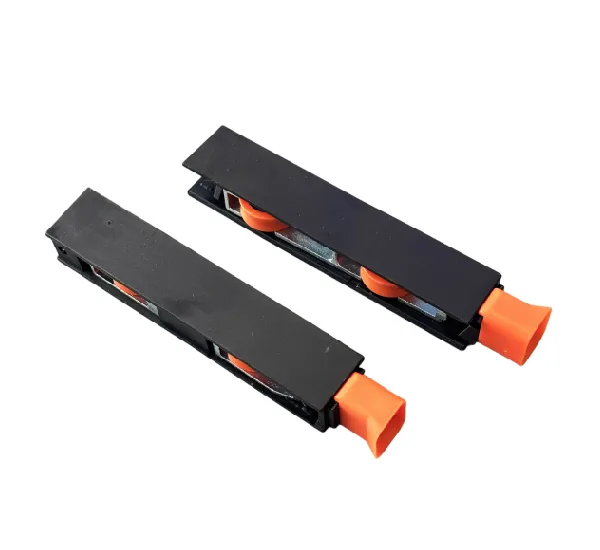
Wheel material is only one part of rolling performance. Check the track material, groove or flat contact, debris path, alignment and guide arrangement. Nylon, POM, PU and steel should not be treated as interchangeable options without a sample run in the intended track. The track and strip roller guide provides a related view of wheel, bearing and track specification.
Measure the door at closed, partly open and fully open positions. Look for uneven wheel contact, rising force, noise, lateral movement and a change in reveal. A track that is slightly out of level can shift the load between rollers, so level and parallel checks should be included in acceptance criteria.
Single and double bearings change the internal layout and may change shaft or bracket requirements. Ask for bearing type, seal or shield details where they affect the environment, but do not claim a service life that the source does not publish. Carbon-steel and stainless brackets also need a finish and exposure decision; the catalog lists material families, not one corrosion result for every model.
Plan how a technician will remove or adjust the embedded assembly after the wall, trim or panel is finished. If the wheel cannot be accessed without dismantling the door, define the replacement method and spare-part identification before approving the sample.
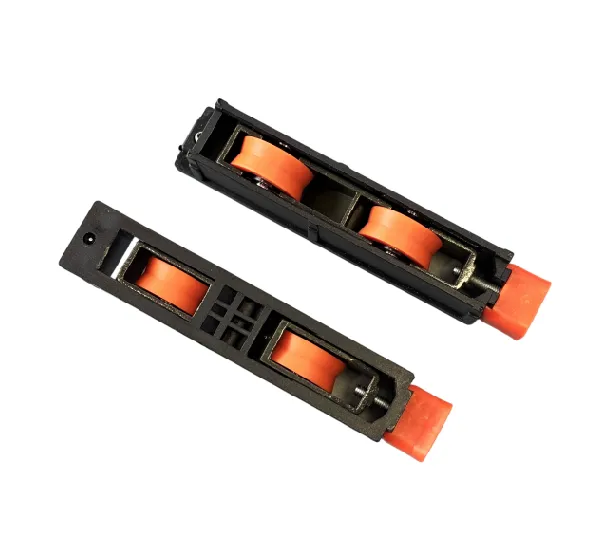
For bearing selection, the roller wheel bearings guide separates wheel, bracket and bearing decisions. HIPAD’s source material does not provide a universal embedded-roller price or certificate number; request model-specific commercial and test information.
Not automatically. Track contact, noise, corrosion, profile and the model’s evidence all matter. Select against the assembly and intended environment.
No. The body, shaft, fixing and wheel position must match the door cavity and track. Use a drawing and a sample.
Include the removed roller, profile section, cavity dimensions, wheel diameter, bearing count, fixing centers, track details and door weight.
No. It describes one part of the construction. Ask for the quoted model’s declared duty evidence and test arrangement.
For an OEM sample or quotation, contact HIPAD with the profile and track drawings. The embedded roller needs its own cavity and track approval even when adjacent door hardware is already specified.
About the author: Allen Wang is CEO and Founder of HIPAD. His supplied background describes manufacturing experience beginning in Qingdao bearing production in 1998 and work with international architectural-hardware buyers. This guide uses HIPAD’s sourced embedded-roller references; model-level duty claims require separate evidence.
We will reply within 24 hours. For urgent requests, contact us on WhatsApp/WeChat at +86 137 9191 8989 or call the same number directly.
*We respect your confidentiality, and all information is protected.
We will only use your information to respond to your inquiry and will never send unsolicited emails or promotional messages.