













Empresa
05 September 2026
 18:18
18:18 Allen Wang | CEO and Founder, HIPAD
Updated: September 5, 2026
A mortise lock body must fit the door profile, handle, spindle, cylinder and strike as one operating system. For B2B sourcing, the decisive information is dimensional: door thickness alone cannot confirm compatibility. Buyers should approve a drawing, a representative sample and the complete mating hardware before releasing a production order.
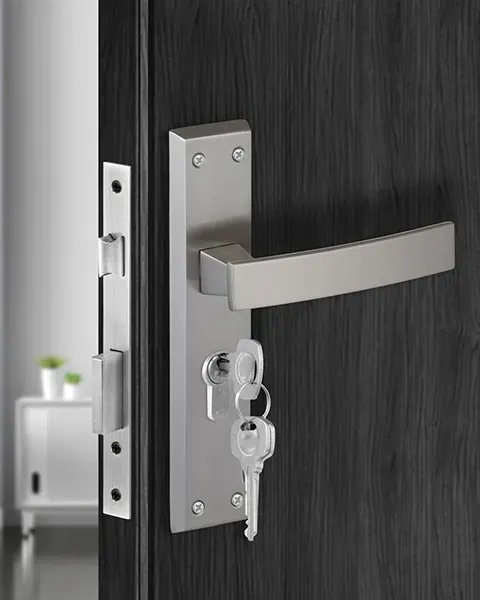
Begin with the door system, not a catalog photograph. Send the supplier a profile section or door drawing that shows the available cavity, edge preparation, handle position, cylinder position and strike relationship. State the opening direction, handing, required function, installation environment and expected order program.
HIPAD’s published lock-family reference includes mortise locks for 35-70 mm aluminum doors. This is a family-level application range, not a universal fit guarantee. The exact lock case, backset, faceplate and mating parts still need to be checked against the selected model drawing.
| Buyer input | Supplier confirmation | Failure prevented |
|---|---|---|
| Door or profile section | Available case depth, edge preparation and fixing space | Lock body cannot enter the profile |
| Espessura da porta | Spindle, cylinder, screws and trim projection | Hardware is too short or protrudes |
| Função | Latch, deadbolt, hook, privacy, passage or keyed operation | Wrong operating behavior |
| Handing and opening direction | Latch orientation and reversible or handed construction | Incorrect latch direction |
| Handle and cylinder | Spindle, follower, centers, cam and case interfaces | Components cannot operate together |
| Frame and strike | Strike position, engagement depth and adjustment | Door closes but does not lock correctly |
A useful request for quotation should identify every critical interface. Suppliers may use different drawing conventions, so label the dimensions instead of relying only on a model code.
A common mistake is treating the same backset as proof of interchangeability. Two lock bodies can share a backset but differ in case height, faceplate, centers, follower, cylinder cam, fixing points or bolt position. Replacement programs need a dimensioned comparison against the original sample.
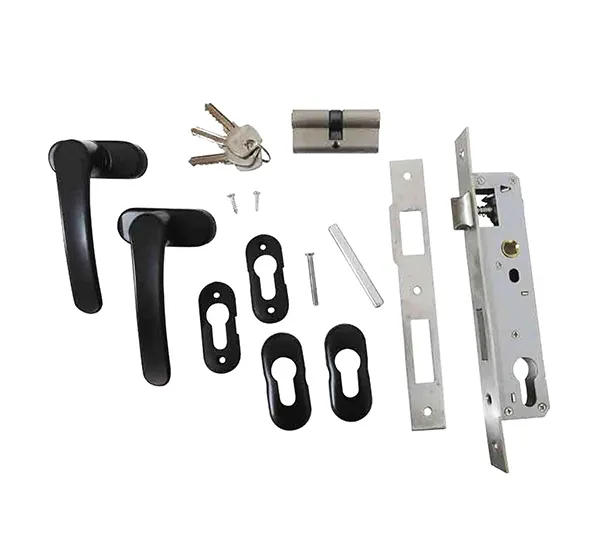
Mortise lock bodies are one part of a broader door-lock program. HIPAD’s published range also references sliding-door locks for 30-60 mm doors, crescent locks for sliding windows, multipoint locks for 40-80 mm entrance doors and brass-and-steel cylinder configurations. These families serve different geometries and functions; they should not be substituted without checking the full opening system.
O Fechaduras para Janelas com Chave range provides a useful overview of related lock categories. For an aluminum sliding application, compare the mortise option with the dedicated Fechaduras para Portas de Correr em Alumínio range before choosing a structure.
Specify whether the opening needs latch-only, latch and deadbolt, hook engagement, key operation, privacy operation or another defined function. Then record the handle set, spindle, cylinder, escutcheon, strike, keep, fasteners and door preparation as a controlled set.
Published HIPAD lock references include steel and zinc-alloy configurations, with brass and steel used in cylinder options. A single material label does not describe the entire assembly. Request the material for the case, faceplate, latch, deadbolt or hook, follower, spring, cylinder interface, strike, keep and fasteners.
Finish approval should identify the substrate, process, color, gloss, texture and visible surfaces. Screen images are unsuitable as the only color standard. Use a physical sample or agreed reference and define protective film, separators and carton packing for finished faces.
Exterior, coastal, wet-area or chemical-cleaning exposure can change the material and finish decision. Disclose the environment before approval and request evidence relevant to the exact model. Do not infer corrosion performance from appearance alone.
Compared with retail replacement listings, an OEM mortise-lock program needs revision control and repeat-order evidence. HIPAD states that it supports drawing-based development, material and finish selection, structure adjustments, logo engraving, private molds and customized packaging.
Tooling, MOQ, price and lead time depend on the chosen structure, material, finish, quantity and packaging. HIPAD does not publish a universal price or MOQ for every mortise lock body, so these items require a project quotation.
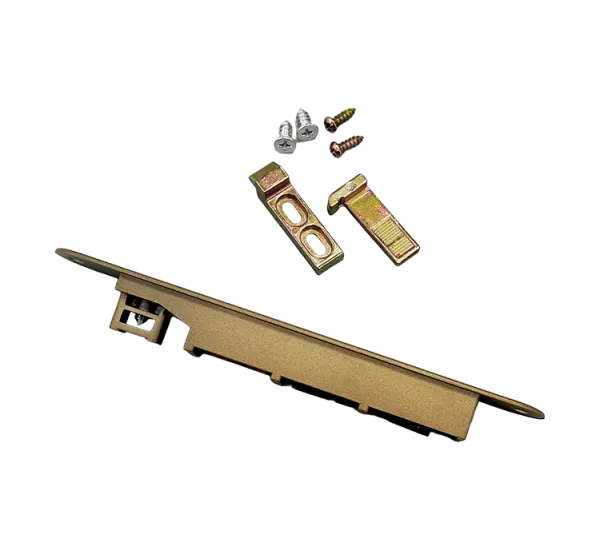
Build the inspection plan around the approved drawing and use case. At minimum, verify model identity, dimensions, material declarations, finish, handing, latch or hook movement, deadbolt travel, follower operation, cylinder fit, strike engagement, supplied accessories, marking and packaging.
Cycle or load requirements must be tied to a named test method and the exact product. HIPAD states that it carries out in-house quality checks through production and can cooperate with third-party inspection organizations such as SGS and Bureau Veritas. This does not mean every lock body has an SGS, BV or ISO product certificate.
ISO 9001:2015 defines quality-management-system requirements; it does not certify the performance of an individual lock. Ask for model-specific reports when a project specification requires mechanical, durability, corrosion or regulatory evidence.
Packaging should keep the lock body and its mating parts identifiable. Record the model, revision, function, handing, finish, cylinder or key reference, strike, fasteners, instructions, labels, quantity per box and spare-part separation. Protect faceplates and finished trim from contact damage.
For repeat orders, reference the approved drawing and sample rather than a photograph or informal name. Require written notice before changes to material, subcomponents, tooling, finish process, factory, marking, packaging or inspection method.
The broader custom door hardware OEM guide explains how drawings, finishes, branding and packaging fit into a complete hardware program. Buyers comparing supplier capability can also use the window lock manufacturer selection guide for related lock-family checks.
No single dimension proves fit. Case depth, case height, backset, centers, faceplate, follower, cylinder interface, bolt position and fixing points must be checked together against the door preparation.
No. HIPAD publishes 35-70 mm as a family-level application reference for mortise locks used with aluminum doors. The exact model drawing, spindle, cylinder, trim and door profile still require confirmation.
HIPAD supports drawing-based OEM/ODM development, structure adjustments, material and finish selection, branding, private molds and packaging. Feasibility depends on the requested geometry, function, quantity and testing requirements.
No. Test it with the intended handle, spindle, cylinder, strike, keep, fasteners and representative door. The assembly must operate correctly as a system.
A universal public price is not available. Pricing requires a quotation based on structure, materials, finish, tooling, accessories, quantity, packaging, inspection and delivery terms.
Prepare the profile drawing, existing sample, required function, handing, dimensions, handle and cylinder interfaces, strike, material, finish, quantity, packaging and inspection requirements. This allows the supplier to identify an existing solution or define the scope of an OEM development.
Contactar a HIPAD with your door drawing, lock sample and order requirements for a model-specific review and quotation.
Allen Wang is CEO and Founder of HIPAD. He began his career in 1998 as a technical engineer in Qingdao, building practical experience in manufacturing processes, product quality, tooling and mechanical components. His work with international distributors, door and window manufacturers, contractors and project buyers covers product selection, material and finish matching, drawing-based customization, OEM/ODM development, packaging and system compatibility.
Responderemos no prazo de 24 horas. Para pedidos urgentes, contacte-nos por WhatsApp/WeChat através do +86 137 9191 8989 ou ligue diretamente para o mesmo número.
*Respeitamos a confidencialidade dos seus dados e protegemos todas as informações fornecidas.
Utilizaremos os seus dados apenas para responder ao pedido e nunca enviaremos mensagens de correio eletrónico não solicitadas nem conteúdos promocionais.