












Company
16 October 2026
 15:03
15:03 Allen Wang | CEO and Founder, HIPAD
Updated: August 21, 2026
Custom bathroom hardware programs combine appearance, glass compatibility, wet-area durability, installation geometry and repeatable supply. A private-label brand may need a distinctive handle and finish, while a shower-door fabricator needs reliable holes, gaskets, hinges, seals and packaging that fit its production process.
This OEM guide explains how to turn a bathroom hardware idea into a controlled specification. It covers bathroom glass handles, lever handles, dimensions, finishes, branding, packaging, samples and production controls without inventing prices, certifications or project results.
Before requesting a quotation, identify the application: frameless shower door, framed shower door, bathroom partition, glass bathroom entrance, hotel wet-area door or another interior system. Provide glass type and thickness, panel dimensions, holes and cutouts, door mass, opening direction, hinge or handle layout, environment, quantity and target market.
| Buyer input | Specification details | Risk controlled |
|---|---|---|
| Glass | Type, thickness, panel size, holes, cutouts, edge treatment and processing revision | Wrong gasket, fixing, hinge or handle preparation |
| Door function | Hinged or sliding, handing, opening angle, privacy or passage function, stop and seal | Incompatible hardware set or clearance problem |
| Environment | Wet area, cleaning chemicals, humidity, coastal exposure and ventilation | Finish damage or unsuitable material choice |
| Appearance | Material, finish, color, gloss, texture, logo and visible surfaces | Inconsistent private-label appearance |
| Commercial scope | Quantity, sample rounds, tooling, packaging, spares, labels and delivery phases | Unclear OEM cost and repeat-order risk |
Keep the glass-processing drawing and hardware drawing on the same revision. Approve a representative sample before processing a full glass batch, because holes and cutouts are difficult to correct after tempering.
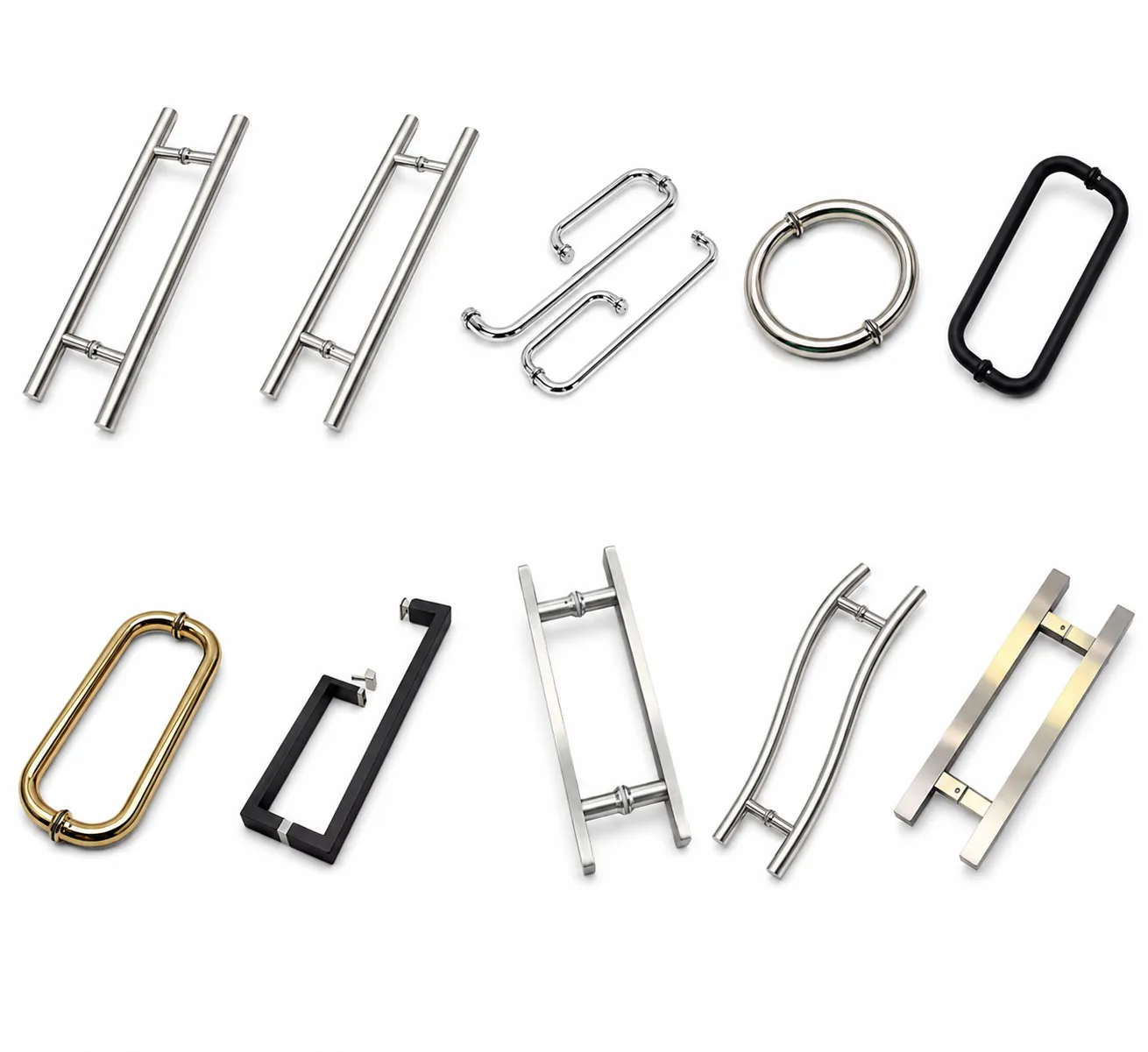
HIPAD’s published handle references include SUS304 and SUS201 glass pull handles for 8-12 mm glass with 300-1200 mm length options, bathroom lever handles for 30-50 mm doors, sliding back-to-back handles for 10-40 mm doors with 200-800 mm length options, and other door-handle configurations. These are family-level references; the exact model still requires a drawing and fit confirmation.
For each custom handle, define the overall length, tube or bar diameter, center-to-center distance, projection, mounting hole, bolt, washer, gasket, glass clearance, grip area and end treatment. Confirm whether the handle is back-to-back, single-sided, lever-operated, pull-only or integrated with a lock or latch.
Review HIPAD’s bathroom glass door handle range and other handle options as product-family references.
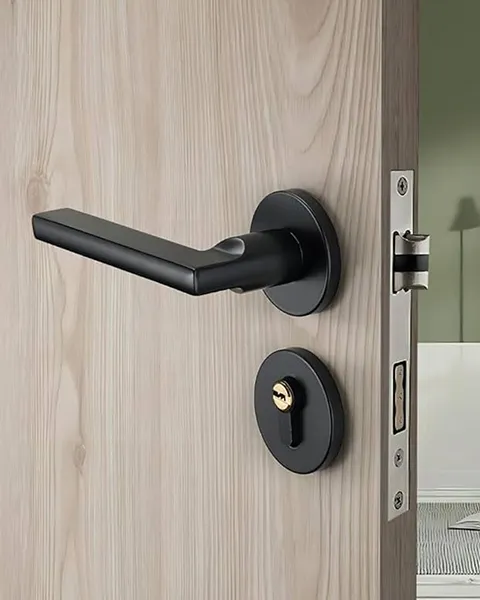
Glass thickness is a starting point, not a complete compatibility specification. Confirm hole diameter, edge distance, cutout shape, gasket thickness, bolt length, washer, clamp pressure, handle projection and clearance from the wall, seal and adjacent panel.
For hinge and shower-door interface considerations, see HIPAD’s shower door hinge guide. A family name or photograph is not a substitute for a model drawing.
Bathroom hardware may combine stainless steel, aluminum, zinc alloy, brass, steel, rubber, plastics and gaskets. Select material by function and exposure. Ask for the material of the handle body, hinge, clamp, fastener, pin, spring, sleeve, gasket and concealed components.
SUS304 and SUS201 are published handle material references, but the buyer should confirm the exact model, exposed surfaces, finish process and environmental suitability. “Stainless” alone does not specify grade, finish, corrosion behavior or the compatibility of mating parts.
Wet-area cleaning can affect finishes and seals. State the cleaning products or maintenance conditions where known, and request the supplier’s care instructions for the proposed finish.
Custom programs often require brushed, polished, matte black, gold, chrome, anodized or another controlled appearance. Approve a physical sample and record substrate, process, color reference, gloss, texture, visible surfaces, permitted process marks and protective packaging.
If a program combines handles, hinges, clamps and accessories from different product families, compare the samples together. Different substrates and finishing processes can create visible differences even when the color name is identical.
Define logo position, marking method, artwork revision, minimum line weight, visible area, barcode, label language and packaging structure. Ask whether the logo is laser marked, printed, etched, molded or applied by another process, and approve a physical marked sample.
Tooling terms should identify ownership, maintenance, revision approval, storage, replacement and permitted use. A custom mold or jig may be needed for a dimension change, private shape or branded part. Confirm the sample rounds and pilot quantity before mass production.
Packaging can be individual retail-ready packs, complete shower-door kits or installation-zone cartons. Specify item code, finish, quantity, screws, gaskets, instructions, carton labels, barcode, moisture protection and spare-part separation.
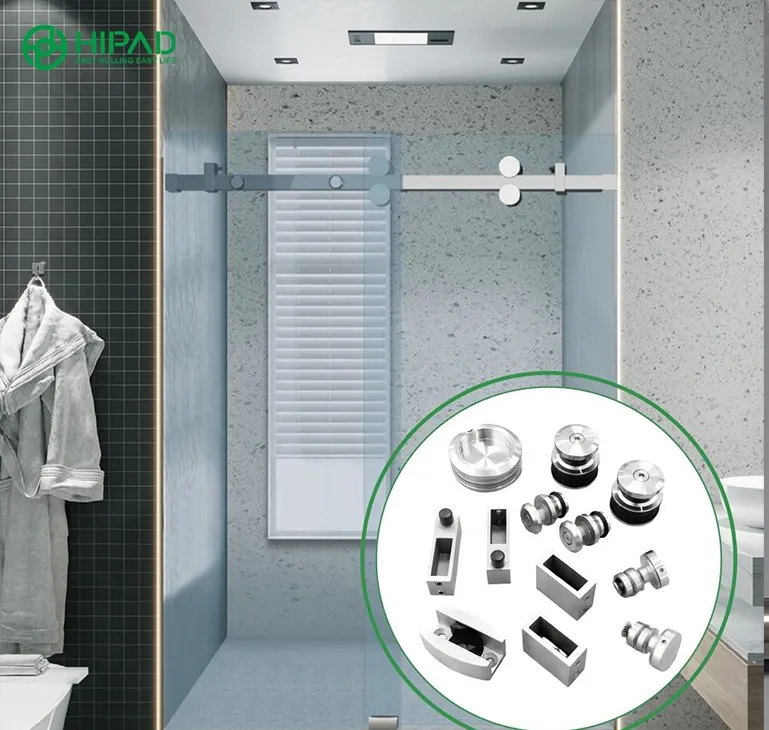
Use a staged approval process:
HIPAD states that it supports drawing-based OEM/ODM development, sample confirmation, finish and material adjustment, branding, packaging and private molds. Feasibility, tooling, MOQ, pricing and lead time require a project-specific quotation.
Inspection should cover model identity, quantity, dimensions, glass interface, material, finish, function, assembly, accessories, marking and packaging. For critical parts, record the actual fit and function result against the approved sample.
HIPAD states that internal quality checks are used through production and that third-party providers such as SGS and Bureau Veritas may be involved when required. This does not mean every bathroom hardware product carries an SGS, BV or ISO product certificate. Request exact documents when the project requires them.
ISO 9001:2015 describes quality-management-system requirements; it is not a product certificate. Keep system terminology separate from model-specific test or inspection evidence.
Provide application, glass type and thickness, panel dimensions, holes and cutouts, door function, hardware list, materials, finishes, branding, quantities, packaging, inspection and delivery requirements.
HIPAD supports OEM/ODM branding, drawing-based changes, material and finish matching, packaging and private molds. Exact feasibility, tooling, MOQ, pricing and lead time require a quotation.
HIPAD’s published glass-pull handle reference includes 8-12 mm glass, while other handle families have different published door ranges. Confirm the exact model drawing and gasket arrangement before approval.
No universal public price range or MOQ is disclosed. The offer depends on product family, material, finish, tooling, packaging, quantity, documents and delivery requirements.
Retain the approved sample, drawing revision, bill of materials, finish reference, logo artwork, packaging files, inspection plan and original purchase order. Require notification before material, tooling, finish or packaging changes.
A complete OEM brief gives the manufacturer enough information to identify compatibility and production risks before sampling. Include glass drawings, handle dimensions, door function, material and finish, branding, packaging, quantities, inspection and delivery phases.
Contact HIPAD with your bathroom glass hardware drawings, sample, finish reference, logo artwork, quantity plan and packaging requirements for a project-specific review.
Allen Wang is CEO and Founder of HIPAD. He began his career in 1998 as a technical engineer in Qingdao, developing hands-on experience in manufacturing processes, tooling, mechanical components and product quality. His work with international distributors, door and window manufacturers, contractors and design-oriented brands covers product selection, material and finish matching, drawing-based customization, OEM/ODM development, private molds, packaging and system compatibility.
We will reply within 24 hours. For urgent requests, contact us on WhatsApp/WeChat at +86 137 9191 8989 or call the same number directly.
*We respect your confidentiality, and all information is protected.
We will only use your information to respond to your inquiry and will never send unsolicited emails or promotional messages.