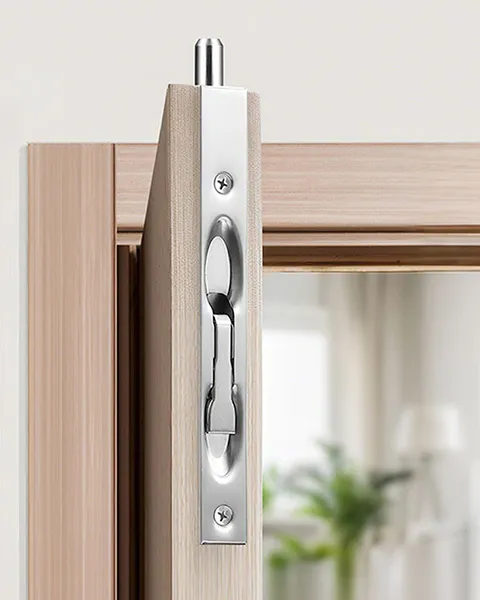














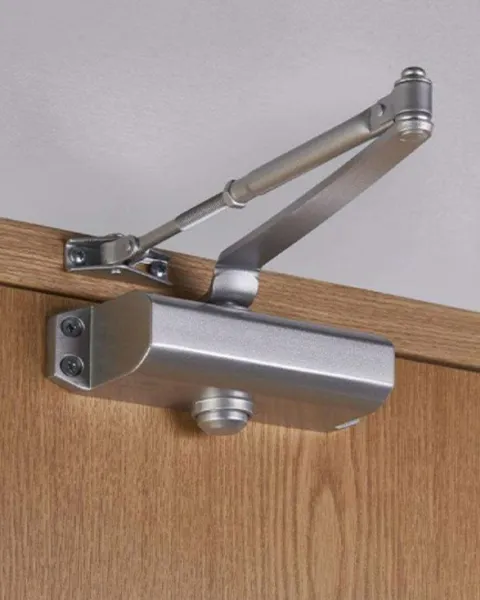
Unternehmen
16 October 2026
 18:18
18:18 Allen Wang | CEO and Founder, HIPAD
Updated: August 18, 2026
Glass hardware must connect the architectural intent to a buildable, serviceable system. Handles, hinges, clamps, rollers, patch fittings, railing components, seals and fasteners all interact with the glass type, thickness, cutouts, holes, edge distances, supporting structure and installation sequence.
This guide helps project buyers, distributors, fabricators and contractors compare a glass hardware manufacturer or supplier using measurable specifications. It covers glass doors, shower enclosures, partitions, sliding systems, railings and related architectural applications without assuming that one component suits every project.
Identify the system before selecting a product family. State whether the hardware is for a hinged door, sliding door, fixed partition, shower enclosure, balcony, stair, pool fence or another application. Provide the glass type and thickness, panel dimensions, estimated mass, opening direction, supporting structure, hole and cutout drawing, edge distances, finish, environment and target market.
| Project input | Information to provide | Risk controlled |
|---|---|---|
| Glass specification | Type, thickness, dimensions, processing, holes, cutouts and edge treatment | Wrong gasket, clamp, hinge or fixing geometry |
| System function | Hinged, sliding, fixed, railing, partition, wet-area or entrance application | Using a component outside its intended arrangement |
| Supporting structure | Wall, floor, ceiling, post, channel, frame or track construction | Inadequate or incompatible attachment |
| Operating conditions | Panel mass, opening angle, travel, frequency, wind, water and cleaning exposure | Premature wear, misalignment or corrosion |
| Appearance | Base material, finish, color, gloss, texture and approved sample | Visible inconsistency across the project |
| Commercial scope | Quantity, packaging, spares, delivery phases, documents and target date | Incomplete quotations and site delays |
Hardware drawings and glass-processing drawings must use the same revision. A late change to a hole center, cutout or glass thickness can make approved hardware unusable, so drawing control belongs in the purchase process.
Glass door sets may combine pull handles, lever handles, hinges, locks, patch fittings, pivots, floor springs, closers, stops and seals. Review the complete opening rather than buying each item independently. Confirm glass preparation, door mass, swing direction, opening angle, handle clearance, lock engagement and the position of floor or frame components.
HIPAD’s published handle reference includes SUS304 and SUS201 glass pull handles for 8-12 mm glass with 300-1200 mm length options. These are family-level ranges, not proof that every handle suits every door. Request the exact model drawing, mounting-center dimension, bolt and gasket arrangement, projection, finish and installation instruction.
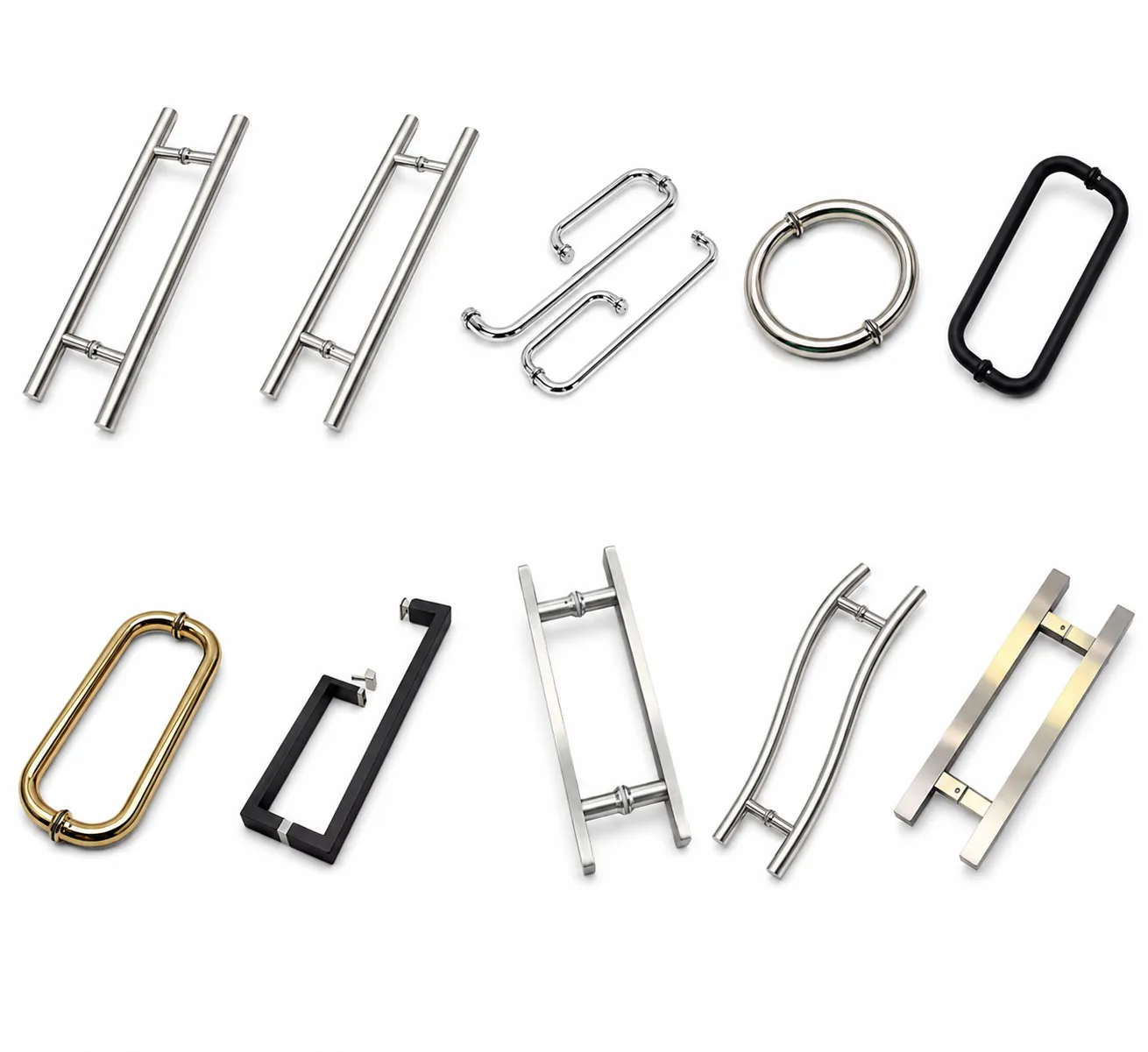
For related product options, review HIPAD’s bathroom glass door handles and the shower door hinge specification guide. Project-specific testing or documentation should be requested by exact model and requirement.
A sliding glass door depends on the relationship between track, rollers, hangers or brackets, guides, stops, anti-jump provisions, handles, locks and glass preparation. Confirm whether the door is top-hung or bottom-running and calculate the complete leaf mass, including glass, frame and attached hardware.
Check the track profile and support, roller wheel material, bearing arrangement, bracket geometry, adjustment range, guide location, stopper clearance and service access. HIPAD publishes nylon, POM, PU and steel roller options across relevant sliding systems, with single- or double-bearing and fixed or adjustable configurations. Model-specific load and compatibility information must be confirmed rather than inferred from a product photo.
Die sliding glass door hardware guide und door roller hardware specification guide provide additional selection checks.
Glass clamps and fixing components transfer loads between the glass and the supporting structure. Buyers should specify the clamp model, glass thickness, panel dimensions, mounting orientation, base material, gasket, fastener, anchor, finish and substrate. Confirm whether the glass requires holes or can be installed with a pressure-clamping arrangement.
Do not assume that a clamp body alone defines the system. Gaskets protect the glass and help distribute contact; fasteners connect the body; anchors connect the assembly to the substrate. Each interface needs an approved drawing and installation method. Edge distance, glass processing and structural requirements must be supplied by the responsible project designer.
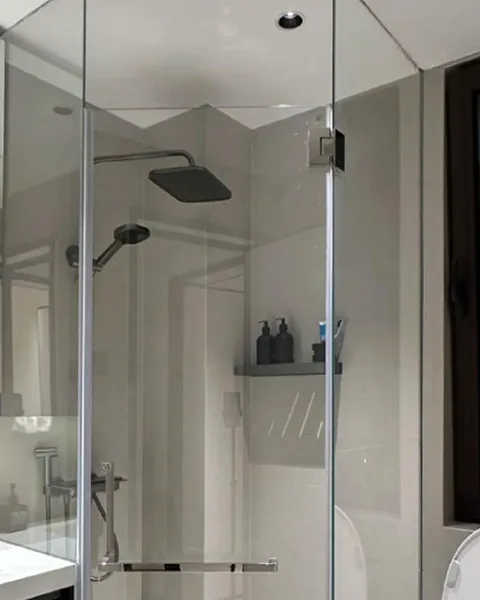
For clamp-material considerations, see the stainless steel glass clamp guide. Where a project requires a specific grade or test document, request traceable evidence for the exact supplied model.
Railing systems may use posts, base channels, clamps, spigots, standoffs, handrails, connectors, end caps, brackets and anchors. The project designer must establish loads, glass specification, panel dimensions, support spacing, edge distances, drainage and substrate capacity. The hardware supplier should then match the component geometry, material, finish and installation interface to those approved requirements.
Wet, coastal and exterior environments need special attention to material selection, fasteners, surface finish, drainage, crevices and contact between dissimilar materials. “Stainless steel” by itself is not a complete project specification; ask for the declared grade, finish process and scope of supplied parts.

Many catalog descriptions lead with a glass-thickness range, but fit also depends on the hardware geometry, gasket, hole diameter, cutout, edge distance, panel size, mass, opening direction and supporting structure. Treat thickness as a screening field, then validate the full interface.
Processing a full batch of glass before hardware sample approval increases risk because holes and cutouts are difficult to correct after tempering. Coordinate sample timing with the glass fabricator and hardware supplier.
Published HIPAD categories use stainless steel, aluminum, zinc alloy, steel, brass, engineering plastics, rubber and related materials depending on the product family. Ask for the material of every functional component, including concealed fasteners, pins, springs, axles, cylinders, bearings and gaskets.
Finish names such as polished, satin, brushed, matte black, gold or plated are not complete acceptance criteria. Approve a physical sample and record substrate, process, color, gloss, texture, visible surfaces, permissible process marks and protective packaging. If multiple product families must visually match, compare them together because different substrates and processes can produce different appearances.
A useful supplier comparison considers more than catalog breadth. Ask each candidate for the same evidence:
HIPAD states that it supports drawing-based OEM/ODM development, sample confirmation, material and finish adjustment, private molds, packaging and project-oriented supply. It also states that in-house quality checks are used and that third-party inspection providers such as SGS and Bureau Veritas may be involved when required. These statements do not mean every product carries a third-party certificate.
ISO 9001:2015 describes quality-management-system requirements; it is not a glass hardware product certificate. If a project requires particular reports, classifications or regulatory evidence, identify the exact requirement in the inquiry and verify the supplied document scope.
Inspection should follow the approved drawing and failure risks. Check model identity, quantity, dimensions, material, finish, glass interface, gasket, fastener, assembly, movement, marking, accessories and packaging. For critical systems, perform a representative fit and function check before releasing the batch.
Package finished components to prevent scratches and mixing. Labels should include purchase order, project, area or opening, model, finish, handing where relevant, quantity and carton sequence. Keep installation sets and spares separate. Retain the approved sample, drawing revision, finish reference and original order for future replacement.
Send the application, glass type and thickness, panel dimensions and mass, hole and cutout drawings, supporting structure, hardware list, material and finish, quantities, environment, target market, packaging and required documentation.
HIPAD publishes hardware for glass doors, sliding systems, bathrooms, partitions and railings. Each product family and interface still needs separate project approval.
Approve the hardware drawing and representative sample before processing the full glass batch. Confirm fit, movement, appearance, gaskets, fasteners and supporting components together.
No universal public price range or MOQ is disclosed. Pricing and minimum quantities depend on product family, material, finish, tooling, packaging, quantity, documentation and delivery requirements.
HIPAD supports OEM/ODM development, drawing-based changes, materials, finishes, branding, packaging and private molds. Feasibility, tooling, samples, MOQ and lead time require a project-specific quotation.
A strong inquiry gives the supplier a controlled basis for review: application, glass and support drawings, interface dimensions, loads, material, finish, quantities, packaging, inspection and documentation. This reduces assumptions before sampling and preserves a reliable record for production and replacement orders.
Kontakt zu HIPAD with your glass drawings, hardware schedule, project application, quantities, finish references and delivery plan for a project-specific review and quotation.
Allen Wang is CEO and Founder of HIPAD. He began his career in 1998 as a technical engineer in Qingdao, developing hands-on experience in manufacturing processes, tooling, mechanical components and product quality. His work with international distributors, manufacturers, contractors and project buyers covers product selection, material and finish matching, drawing-based customization, OEM/ODM development, private molds, packaging and system compatibility.
Wir antworten innerhalb von 24 Stunden. Bei dringenden Anfragen erreichen Sie uns über WhatsApp/WeChat unter +86 137 9191 8989 oder telefonisch unter derselben Nummer.
*Wir behandeln Ihre Angaben vertraulich und schützen sämtliche Informationen.
Wir verwenden Ihre Angaben ausschließlich zur Beantwortung Ihrer Anfrage und versenden niemals unaufgeforderte E-Mails oder Werbenachrichten.