













Entreprise
26 September 2026
 13:43
13:43 Poor window selection can make a room feel hot, stuffy, or hard to ventilate. If the opening style does not match the project, buyers may face water leakage, poor airflow, or difficult operation. A top hung window can solve many of these issues.
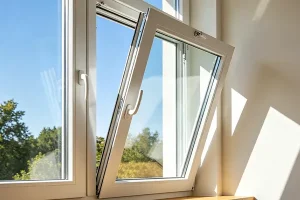
A top hung opening window is a window type hinged at the top, with the sash opening outward from the bottom. It is also commonly called a top-hung window or awning window. This design allows good ventilation, helps protect against light rain, saves interior space, and can provide good sealing when closed. The U.S. Department of Energy describes awning windows as windows hinged at the top that open outward, and notes that hinged projecting windows often have lower air leakage because the sash closes tightly against the frame.
What Is a Top Hung Opening Window?
How Does a Top-Hung Window Work?
Is a Top Hung Window the Same as an Awning Window?
What Are the Main Benefits of Top Hung Window Ventilation?
Top Hung vs Side-Hung Casement Window: What Is the Difference?
Top Hung Window vs Double-Hung Windows: Which Is Better?
Where Are Top-Hung Windows Commonly Used?
What Hardware Is Needed for a Top Hung Opening Window?
How Do Top-Hung Windows Improve Energy Efficiency and Sealing?
How Should B2B Buyers Choose Top-Hung Window Hardware?
A top hung opening window is a window with a sash connected to the upper part of the window frame by hinges. The bottom part of the sash moves outward when opened. Because the sash is hinged at the top, the window creates a small shelter-like opening.
This type of window is often used in bathrooms, kitchens, basements, stairwells, apartment buildings, hotels, offices, and commercial projects. It is popular where people need fresh air but also want to save interior space.
In many markets, a top-hung window is also called an awning window. The name comes from the way the sash opens like a small awning over the window opening. This makes the design useful when light rain protection and daily ventilation are important.
A top-hung window works by using a hinge system fixed at the top of the sash. When the handle, crank, or friction stay is operated, the sash moves outward from the bottom. The top stays connected, while the lower part opens outwards.
The opening angle depends on the window hardware. Some windows open only slightly for safe ventilation. Others can be fully opened to allow more airflow. The design must balance airflow, safety, weather protection, and hardware load capacity.
For B2B buyers, the smooth movement of a top hung window depends heavily on hardware quality. Hinges, friction stays, handles, locking points, screws, seals, and frame accessories all affect how well the sash opens, closes, and presses tightly against the frame.
In most practical building discussions, a top-hung window and an awning window are very similar. Both describe a window sash that is hinged at the top and opens outward from the bottom. The Department of Energy classifies awning windows as top-hinged windows that open outward.
The term top hung window is often used in architectural hardware, systèmes de fenêtres en aluminium, and project specifications. The term awning window is more common in residential window sales and homeowner guides.
So, when a buyer asks for a top hung casement window, top-hung opening window, or awning window, the basic design is usually the same. The final product details may vary by profile system, glazing type, opening angle, and hardware configuration.
The biggest benefit of a top hung opening window is controlled ventilation. When the sash opens outward from the bottom, fresh air can enter while the top hinge keeps the sash stable. This helps circulate fresh air and improve indoor air quality.
This design is useful in rooms where moisture builds up, such as bathrooms, kitchens, laundry rooms, and basements. Good ventilation helps reduce stuffy indoor air and supports a more comfortable living or working space.
Another benefit is rain protection. Because the sash opens outward like a small cover, a top-hung window can often remain slightly open during light rain. This makes it useful for buildings that need windows for ventilation without exposing the room directly to rain.
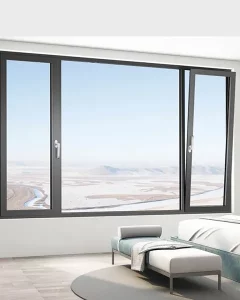
A casement window is generally a hinged window. The hinge can be placed on the side or at the top, depending on the design. A side-hung casement window has hinges on the side of the window, while a top hung casement window has hinges at the top.
Side hung windows often provide a wider opening and may catch side breezes well. They are common for bedrooms, living rooms, offices, and traditional residential buildings. However, a side-hung sash needs enough space outside to swing open.
A top hung window opens outward from the bottom. It is better suited for controlled ventilation, privacy, and areas where a wide side-opening sash may not be ideal. Both designs can work well, but the right choice depends on the building layout, airflow needs, safety requirements, and hardware system.
| Feature | Top Hung Window | Side-Hung Casement Window |
|---|---|---|
| Hinge Position | Top of sash | Side of sash |
| Opening Direction | Outward from bottom | Outward from side |
| Ventilation Style | Controlled airflow | Larger side opening |
| Rain Protection | Better during light rain | Less rain protection when open |
| Interior Space | Saves interior space | Saves interior space if outward-opening |
| Common Use | Bathrooms, kitchens, basements | Bedrooms, living rooms, offices |
Double-hung windows have two sashes that move vertically. In many designs, both the upper and lower sash can slide up or down. Some double-hung windows also support tilt-in or tilting inward functions for easier cleaning.
A top hung window works differently. It does not slide vertically. Its sash opens outward from the bottom. This makes it closer to an awning or casement style than a single-hung or double-hung window.
The Department of Energy notes that awning and casement windows generally have lower air leakage than sliding windows because the sash presses against the frame when closed. It also notes that single- and double-hung windows are sliding windows and generally have higher air leakage rates than projecting or hinged windows.
For buyers focused on good sealing, a top-hung or casement-style window may be attractive. For buyers who prefer a traditional style, easy vertical movement, and tilt-in cleaning, double-hung windows may be more suitable.
Top-hung windows are commonly used in both residential and commercial buildings. They are especially useful where space, airflow, and privacy matter.
Common applications include:
This window type is also useful for smaller windows placed high on a wall. A high-level opening can provide ventilation while keeping privacy. For larger windows, the hardware must be carefully selected to support the sash weight.
Top-hung windows can match many architectural styles. They can be used with aluminum frames, uPVC frames, timber frames, stainless steel hardware, and double-glazed or insulated glazing systems.
A top hung opening window needs reliable hardware. The sash moves under gravity and wind pressure, so each part must work together. Poor hardware can cause sagging, noise, loose movement, or difficult closing.
Common hardware includes:
| Hardware Part | Main Function |
|---|---|
| Top hinge | Connects the sash to the frame |
| Friction stay | Controls opening angle and supports sash |
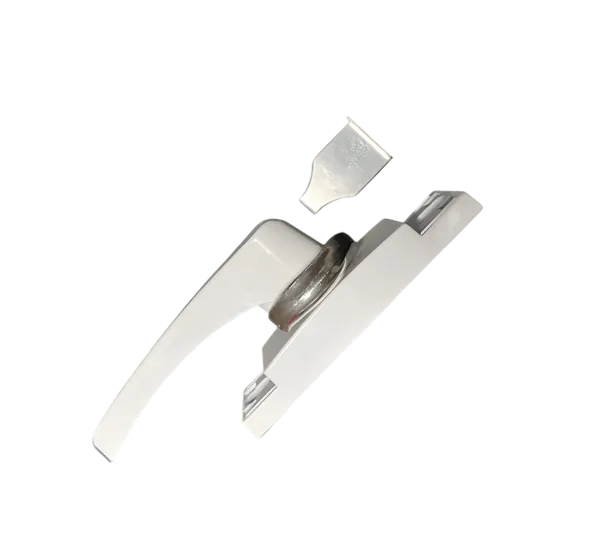
| Poignée | Allows user operation |
| Locking system | Secures the sash when closed |
| Seal strip | Improves air and water sealing |
| Screws and fasteners | Fix hardware to the frame and sash |
| Restrictor | Limits opening for safety |
| Support arm | Helps support larger or heavier sash designs |
For project contractors and window manufacturers, hardware quality is not a small detail. It directly affects safety, smooth operation, sealing, anti-theft performance, and service life.
As a China-based architectural hardware manufacturer, we provide door hardware, window hardware, bathroom hardware, stainless steel hardware, and stainless steel railing systems. For top-hung window projects, we can support OEM/ODM hardware customization based on sash size, frame profile, material, finish, and project requirement.
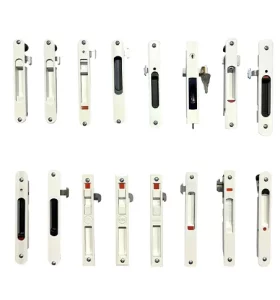
A top-hung window can support better energy efficiency when it uses a good frame, proper weather seal, quality glazing, and strong locking hardware. The sash presses against the frame when closed, helping reduce air leakage.
Energy.gov explains that awning and casement windows generally have lower air leakage rates than sliding windows because the sash closes by pressing against the frame. This is why many buyers consider top-hung, awning, and casement-style windows when they want better sealing.
However, the window itself is only one part of the system. Glazing, frame material, sealing strips, installation accuracy, and wall connection also affect insulation performance. A good window can still perform poorly if installation is not correct.
For B2B buyers, this means you should not choose only by appearance. You should check:
For hardware importers, distributors, building material suppliers, door and window manufacturers, system fabricators, and project contractors, top-hung window hardware must be selected carefully. A low-quality hinge or stay may work at first, but it may fail after repeated use.
The first step is to confirm the sash size and weight. A small top-hung window may need simple hardware. A larger or heavier sash requires stronger hinges, durable friction stays, and reliable fasteners.
The second step is to confirm the environment. Coastal areas, bathrooms, kitchens, hotels, and humid buildings may require stainless steel or corrosion-resistant surface treatment. For immeubles de grande hauteur, safety restrictors and secure locking points may also be important.
B2B Selection Checklist
| Buyer Question | Pourquoi c'est important |
|---|---|
| What is the sash size and weight? | Determines hinge and stay load capacity |
| Is the window inward or outward opening? | Affects hardware type and installation |
| What is the frame material? | Aluminum, uPVC, wood, or steel need different fixing methods |
| Is the window used indoors or outdoors? | Determines corrosion resistance |
| Is ventilation the main goal? | Helps define opening angle and restrictor type |
| Is better sealing required? | Requires good locks and seals |
| Is OEM/ODM branding needed? | Affects logo, packaging, and finish customization |
| Is the project residential or commercial? | Affects durability and testing requirements |
As a factory-direct manufacturer, we understand that buyers need stable quality, consistent finish, suitable packaging, and repeatable supply. For architectural hardware brands and project buyers, we can help customize window hardware solutions for different markets and building systems.
A top-hung window has many practical benefits. It provides good ventilation, saves wall space, protects interior space, and can support good sealing. It is also suitable for areas where the window must open without affecting furniture placement.
It can also create architectural interest. A row of top-hung windows near the ceiling can bring in light transmission while maintaining privacy. In bathrooms or stairwells, this can improve both comfort and aesthetic appeal.
But top-hung windows also have limits. Very large sash sizes may need stronger hardware. The exterior sash may be harder to clean from inside compared with some tilt-and-turn windows or double-hung windows. Some projects may require professional installation to ensure safety and long-term performance.
| Avantages | Limitations |
|---|---|
| Good ventilation performance | Large sash requires stronger hardware |
| Can stay slightly open in light rain | Exterior cleaning may be harder |
| Saves interior space | Opening angle may be limited |
| Good sealing when closed | Needs proper installation |
| Suitable for small and high-level openings | Not always ideal for emergency exit use |
| Supports modern and traditional style projects | Hardware quality is critical |
For residential buildings, top-hung windows help improve comfort. For commercial buildings, they help provide controlled airflow. For hotels, apartments, schools, and hospitals, they can support daily ventilation while keeping the design simple.
For B2B buyers, the value is even wider. A good top-hung window system can reduce maintenance calls, improve project satisfaction, and support long-term brand reputation. Hardware importers and window system suppliers can offer better solutions when they match the window design with the correct hinges, stays, poignées, and locks.
A maintenance-free promise is not realistic for every product. But using durable material, good surface treatment, accurate production, and suitable hardware can reduce maintenance pressure and improve service life.
Imagine an apartment project with bathrooms and kitchens that need compact windows. The developer wants better ventilation, clean design, and controlled opening for safety. A traditional side-hung window may open too wide. A sliding window may not seal as tightly.
A top hung opening window is a practical solution. The sash opens outward from the bottom. It lets air move through the room while keeping the opening controlled. With proper restrictors and stainless steel hardware, the system can support both safety and daily use.
For this kind of project, the buyer should choose corrosion-resistant hinges, stable friction stays, matching handles, reliable locks, and good sealing strips. The result is simple: smoother operation, fewer complaints, better indoor air, and better project value.
What is a top hung opening window?
A top hung opening window is a window with a sash hinged at the top. The bottom part opens outward, creating a controlled opening for ventilation. It is also commonly called a top-hung window or awning window.
Is a top-hung window the same as an awning window?
In many cases, yes. Both terms usually describe a window hinged at the top and opened outward from the bottom. The exact name may depend on the local market or window system supplier.
Does a top hung window provide good ventilation?
Yes. A top hung window provides good ventilation performance, especially in bathrooms, kitchens, basements, and rooms that need controlled airflow. It helps fresh air enter while limiting direct rain entry when slightly open.
Can a top-hung window open inward?
Most top-hung windows open outward. Some special systems may support inward opening or tilt functions, but standard top-hung designs usually open outwards from the bottom.
Is a top hung window energy-efficient?
It can be energy-efficient when combined with quality glazing, good seals, strong locks, and proper installation. The sash can press tightly against the frame when closed, helping reduce energy loss.
What hardware is needed for a top-hung window?
A top-hung window usually needs hinges, friction stays, handles, locks, seal strips, screws, restrictors, and sometimes support arms. Hardware selection depends on sash size, weight, frame type, and project use.
Are top-hung windows suitable for commercial buildings?
Yes. Top-hung windows are suitable for apartments, hotels, schools, hospitals, offices, commercial bathrooms, corridors, and utility rooms. They are especially useful where controlled ventilation and space-saving opening are needed.
A top hung opening window is hinged at the top and opens outward from the bottom.
It is also commonly called a top-hung window or awning window.
This window type is useful for bathrooms, kitchens, basements, stairwells, apartments, hotels, and commercial buildings.
Top-hung windows provide controlled ventilation and can help improve indoor air quality.
Compared with many sliding windows, hinged projecting windows can provide better sealing when closed.
Hardware quality is critical for smooth operation, safety, and long service life.
Key hardware includes hinges, friction stays, handles, locks, seals, screws, restrictors, and support arms.
B2B buyers should check sash size, frame material, opening direction, corrosion resistance, finish, and OEM/ODM customization needs.
A reliable architectural hardware manufacturer can help supply standard and customized top-hung window hardware for global construction and window system projects.
Nous répondons sous 24 heures. Pour toute demande urgente, contactez-nous sur WhatsApp/WeChat au +86 137 9191 8989 ou appelez directement ce même numéro.
*Nous respectons la confidentialité de vos données et protégeons toutes les informations transmises.
Nous utiliserons vos informations uniquement pour répondre à votre demande et n'enverrons jamais d'e-mails non sollicités ni de messages promotionnels.