


Hinged doors
Mortise Lock Bodies
HK lock cases with latch and deadbolt for aluminum, wooden and steel doors, 35–70 mm. Narrow bodies for aluminum profiles.
A mortise lock is a lock whose body (the lock case) is fitted inside a pocket cut into the door edge, with the latch, the deadbolt or hook and the cylinder all working from that one case. HIPAD manufactures mortise lock bodies, hook locks for sliding doors, glass door center locks, multipoint locks, crescent and keyed window locks for aluminum, uPVC, wooden and glass doors from 30 to 80 mm thick. Door and window factories, profile system companies and hardware distributors in 60+ countries source complete lock sets from us.
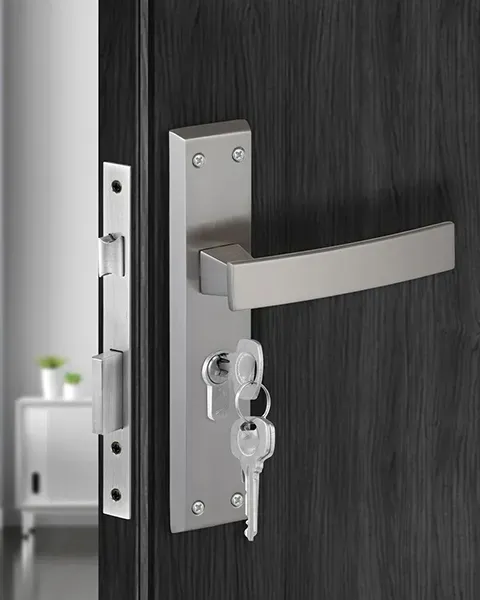
A door lock has three parts that must fit each other and the door: the lock body in or on the door, the cylinder or thumb-turn that the key operates, and the handle that retracts the latch. In a mortise lock the body sits inside the door edge, so it is strong, hidden and works with a lever handle set. Surface (rim) locks sit on the door face instead, and cylindrical (bored) locks fit through round holes.
Aluminum doors have narrow profiles, so they use narrow mortise bodies with a short backset, or hook locks on sliding doors whose hook grips the keeper instead of a latch. Glass doors without frames use center locks or patch locks clamped to the glass.
In Mexico a door lock is a chapa (chapa para puerta de aluminio); elsewhere in Latin America it is a cerradura (cerradura de embutir for a mortise lock, cerradura de gancho for a hook lock). In Brazil it is a fechadura (fechadura de embutir, fechadura para porta de vidro, fechadura multiponto).
Quick answer: hinged aluminum, wooden and steel doors use a mortise lock body with a cylinder and lever handle set; aluminum sliding doors use a hook lock; frameless glass doors use a center lock or patch lock; large entrance doors use a multipoint lock; sliding windows use a crescent lock or a lock handle, with a keyed version where security matters.
HK lock cases with latch and deadbolt for aluminum, wooden and steel doors, 35–70 mm. Narrow bodies for aluminum profiles.

Lever handles, lock body, cylinder and strike packed as one set for aluminum and entry doors, 40–80 mm.

Hook locks and flush locks such as HDL103 and HDL107 for aluminum patio and balcony doors, 30–60 mm.

Center locks for single and double glass doors (HI-5003 to HI-5022) and patch fittings with lock. See glass door hardware.

Several locking points along the door edge, driven by one handle, for 40–80 mm entrance and security doors.

Cam locks for the meeting rails of sliding windows, in aluminum or zinc alloy, chrome, white or black.

Keyed locks for sliding, casement and tilt-and-turn windows where security or child safety matters.
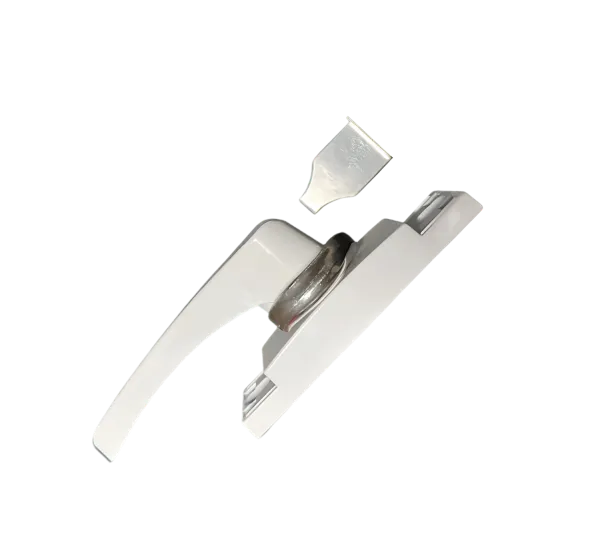
Handle, lock and positioning in one compact part, with optional key cylinder.
Also from HIPAD: concealed flush bolts for the fixed leaf of double doors, and pull handles with lock for glass entrance doors.
Quick answer: a mortise lock body is chosen by backset (door edge to the center of the handle or cylinder) and by centers (handle spindle to cylinder). Narrow aluminum profiles need a short backset of about 25–35 mm; wooden and steel doors usually take 45–60 mm. Lock bodies are often named by these two numbers, for example 3585 = 35 mm backset, 85 mm centers.
| Common body code | Backset | Centers | Typical door |
|---|---|---|---|
| 2585 / 3085 | 25 / 30 mm | 85 mm | Narrow-stile aluminum doors |
| 3585 | 35 mm | 85 mm | Aluminum doors, 35–50 mm profiles |
| 4085 / 4585 | 40 / 45 mm | 85 mm | Wooden and composite doors |
| 5085 / 6085 | 50 / 60 mm | 85 mm | Wooden, steel and security doors |
| 5572 | 55 mm | 72 mm | European (DIN-style) interior and entrance doors |
| 6068 / 5050 | 60 / 50 mm | 68 / 50 mm | Regional standards and smart lock bodies |
| Model | Case size (mm) | Material |
|---|---|---|
| HI-5025 / HI-5026 | 172 × 31 × 20 | Brass, zinc alloy or iron |
| HI-5027 | 160 × 106 × 22 | Stainless steel |
| HI-5028 | 160 × 106 × 22 | Brass, zinc alloy or iron |
| HI-5029 | 130 × 47 | Stainless steel |
| HI-5030 | 112 × 46 | Stainless steel |
A sliding door cannot use an ordinary latch, because the door moves sideways past the frame. Aluminum sliding doors use a hook lock: a hook in the lock body swings out and grips a keeper on the frame, so the door cannot be lifted or slid open. Light interior sliding doors can use a simpler flush lock or latch.
| Lock | How it holds | Use |
|---|---|---|
| Hook lock (mortise) | Hook grips the frame keeper | Aluminum patio and balcony doors, 30–60 mm |
| Flush lock with key | Bolt into the frame; key or thumb-turn | Sliding doors that need a flat inside face |
| Multipoint sliding lock | Two or more hooks along the edge | Large lift-and-slide and high-security doors |
| Bathroom sliding lock | Small bolt or turn latch | Interior and shower sliding doors |
More on choosing sliding door locks in the sliding door hardware guide.
Frameless glass doors have no profile to hold a lock body, so the lock is clamped to the glass. A center lock joins the two leaves of a double glass door, or locks a single door to a fixed panel; a patch lock sits in the bottom patch fitting and bolts into the floor.
| HIPAD model | Size (mm) |
|---|---|
| HI-5003 to HI-5006 | 100 × 66 × 80 |
| HI-5007 / HI-5008 | 82 × 85 |
| HI-5009 to HI-5012 | 192 × 48 × 96 and 85 × 48 × 96 |
| HI-5013 to HI-5016 | 75 × 58 × 23 |
| HI-5017 / HI-5018 | 90 × 65 |
| HI-5019 / HI-5020 | 75 × 40 |
| HI-5021 / HI-5022 | 90 × 55 × 65 |
| Lock | Window | Notes |
|---|---|---|
| Crescent (sash) lock | Sliding windows | Cam on one rail turns into a keeper on the other; chrome, white or black |
| Sliding window lock handle | Sliding windows | Pull, lock and position in one part |
| Window lock with key | Sliding, casement, tilt-and-turn | Stops opening without the key; child safety |
| Casement handle with lock | Casement windows | Drives cam or multipoint rods |
Before ordering a crescent lock, record the rail offset, mounting centers and keeper position; see the crescent lock guide and the window hardware guide.
A multipoint lock locks the door at three or more points along its edge, usually a central lock case plus top and bottom hooks, bolts or rollers, all moved by one handle and cylinder. It pulls the door evenly against the seals and resists forced entry much better than a single latch.
See the multipoint lock specification guide.
| Door or window | Lock | Material | Thickness | Key option | Finish |
|---|---|---|---|---|---|
| Aluminum hinged door | Mortise lock body + lever set | Steel + zinc alloy | 35–70 mm | Optional | Plated / black |
| Aluminum sliding door | Hook lock or flush lock | Zinc alloy | 30–60 mm | Optional | Powder coated |
| Entrance door | Multipoint lock | Steel core | 40–80 mm | Yes | Industrial |
| Frameless glass door | Center lock or patch lock | Stainless steel | Glass door | Yes | Satin / polished |
| Sliding window | Crescent lock or lock handle | Aluminum, zinc alloy | Frame system | Optional | Chrome / white / black |
| Any door with a key | Cylinder | Brass + steel | To door thickness | Yes | Nickel |
| Problem | Likely cause | Fix |
|---|---|---|
| Lock body does not fit the profile | Wrong backset or case depth | Order by drawing, not by code alone |
| Key turns but bolt sticks | Keeper out of line | Adjust the keeper or door alignment |
| Cylinder sticks out or is too short | Cylinder length wrong for the door | Measure door thickness plus handle roses |
| Sliding door can be lifted open | Latch instead of hook lock | Fit a hook lock and matching keeper |
| Rust on faceplate | Plated steel in a wet area | Use stainless steel or a coated finish |
HIPAD has made door and window hardware since 2000. Lock bodies, hook locks, window locks and glass door locks are produced alongside our handles, hinges, rollers and window hardware, so a door or window factory can buy a matched set, in one finish, from one supplier.
HIPAD is ISO 9001 certified, and applicable products carry CE, GS and CSA C-UL certification; certificates per model on request. SGS or BV third-party inspection is available.
| 1. Inquiry | Profile drawing or sample, lock type, finish |
|---|---|
| 2. Samples | 5–7 days for existing models |
| 3. Production | 20–25 working days |
| 4. Shipment | FOB Qingdao or any China port · 30% deposit, 70% before shipment |
| Term | Meaning | Also called |
|---|---|---|
| Mortise lock | Lock whose case fits in a pocket in the door edge | Lock case, lock body, cerradura de embutir, fechadura de embutir |
| Backset | Door edge to the center of the handle or cylinder | Distancia de entrada |
| Centers | Handle spindle to cylinder center | Handle-to-cylinder distance |
| Hook lock | Sliding-door lock whose hook grips the keeper | Cerradura de gancho, chapa de gancho |
| Crescent lock | Rotating cam lock on sliding window meeting rails | Sash lock, cam lock |
| Multipoint lock | Lock with several locking points along the door edge | Multi-point lock, fechadura multiponto |
| Cylinder | Key-operated part that drives the bolt | Euro cylinder, lock core |
| Keeper | Part on the frame that the latch, bolt or hook engages | Strike plate |
A mortise lock is a lock whose body is fitted into a pocket cut into the door edge. The latch, the deadbolt or hook and the cylinder work from that one case, operated by a lever handle set and a key. It is stronger and neater than a surface-mounted lock.
Backset is the distance from the door edge (the faceplate) to the center of the handle spindle or cylinder. Narrow aluminum doors need a short backset of about 25–35 mm; wooden and steel doors usually take 45–60 mm.
They give the backset and the handle-to-cylinder centers in millimeters: 3585 is a 35 mm backset with 85 mm centers, and 5572 is a 55 mm backset with 72 mm centers. Case size and faceplate must still be checked against the door.
Most aluminum sliding doors use a hook lock, whose hook grips a keeper on the frame so the door cannot be slid or lifted open. Flush locks with a key are used where a flat inside face is wanted.
A latch springs into the frame when a hinged door closes. A hook lock swings a hook into a keeper and holds a sliding door against movement in both directions, which a latch cannot do.
A multipoint lock locks the door at three or more points along its edge with one handle and cylinder. It is used on entrance and security doors, typically 40–80 mm thick, and pulls the door evenly against its seals.
With a glass door center lock that joins two glass leaves or a leaf to a fixed panel, or with a patch lock in the bottom patch fitting that bolts into the floor. HIPAD makes center locks HI-5003 to HI-5022 and patch fittings with lock.
Yes. Send the profile drawing or a sample. We match backset, case and faceplate, set the hook or bolt configuration, and add your logo to the faceplate or keys with private-label packing, even for small quantities.
HIPAD is a manufacturer founded in 2000 in Qingdao, China, producing door and window hardware with its own molds and QC. HIPAD is ISO 9001 certified. Qingdao Hipad International Trade Co., Ltd. handles export.
A door and window hardware factory since 2000, supplying door and window factories, profile system companies, distributors and contractors in 60+ countries. Our commitment includes:
Send your profile drawing, lock type and finish. We reply within 24 hours with a matched lock and a factory price.
We will reply within 24 hours. For urgent requests, contact us on WhatsApp/WeChat at +86 137 9191 8989 or call the same number directly.
*We respect your confidentiality, and all information is protected.
We will only use your information to respond to your inquiry and will never send unsolicited emails or promotional messages.
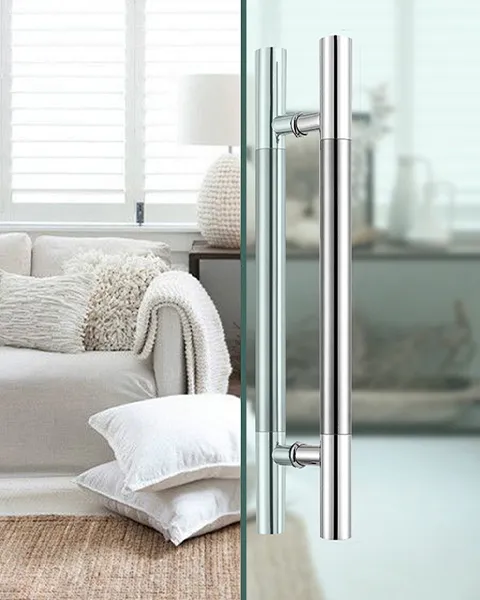 Door Pull Handles
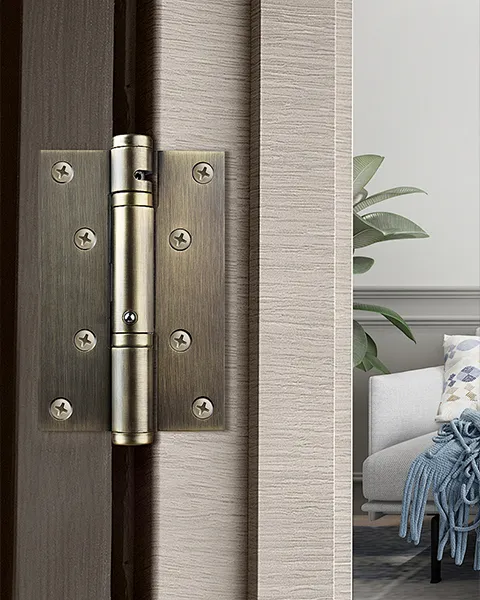 Door Hinges
 Sliding Door Hardware
 Aluminum Window Hardware