













Entreprise
16 October 2026
 10:16
10:16 Allen Wang | CEO and Founder, HIPAD
Updated: October 9, 2026
Roller wheel bearings must be selected as a complete assembly: wheel material, diameter, bearing count, bracket, adjustment and track interface work together. Hardware distributors should request a model drawing, declared load range and production-intent sample instead of approving a wheel from diameter or bearing appearance alone.
The supplied HIPAD reference lists nylon, POM, PU and steel wheels; single or double bearings; multiple diameter options; carbon-steel or stainless-steel brackets; adjustable or fixed types; and compatibility options for standard and heavy-duty tracks. The stated load span runs from light to heavy duty, but no universal numeric rating is published. Each quotation therefore needs a model-specific load declaration.
| Selection field | Published options | Approval evidence |
|---|---|---|
| Wheel material | Nylon, POM, PU, steel | Material identified for the quoted model |
| Bearing arrangement | Single or double | Section drawing and sample |
| Wheel diameter | Multiple options | Exact diameter, width and tolerance |
| Bracket | Carbon steel or stainless steel | Material and finish declaration |
| Ajustement | Adjustable or fixed | Adjustment range and locking method |
| Track class | Standard or heavy-duty compatibility | Matched wheel-and-track drawing |
| Load | Light-to-heavy-duty family range | Model-specific rating and test method |
A wheel must sit correctly in the track profile and maintain clearance through the full travel. Send the supplier the track section, rail material, installation orientation and allowable adjustment. A nominal wheel diameter cannot show whether the tread profile, flange, bracket width or fastener position will fit.
Compared with catalog-first selection, a track-first review exposes conflicts before tooling or batch purchasing. This matters when an existing track is worn, coated or installed out of level. A sample that runs on a short clean rail may not reveal a transition or alignment problem present in the real system.
Nylon, POM, PU and steel are all present in the published family. Material selection should be tied to the track, environment, duty and acceptance test. Do not infer noise, wear, floor protection, chemical resistance or temperature limits from the material name alone; request model-specific evidence for the conditions that matter to the project.
Material identity also belongs in incoming inspection. If color or appearance varies by batch, use the approved specification and supplier documentation rather than visual judgment as the only check.
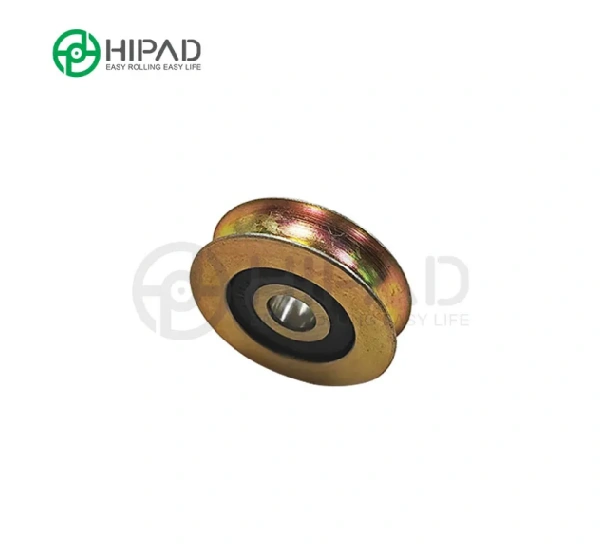
The source lists both single and double bearing formats. The choice changes the assembly geometry, but bearing count alone does not establish capacity or service life. Ask for the complete roller drawing, bearing designation, wheel dimensions, bracket construction and declared load for the exact model.
A common mistake is to treat 鈥渄ouble bearing鈥?as an automatic upgrade. If the bracket, fastener, track contact or adjustment is not matched to the application, adding a second bearing does not resolve the limiting interface.
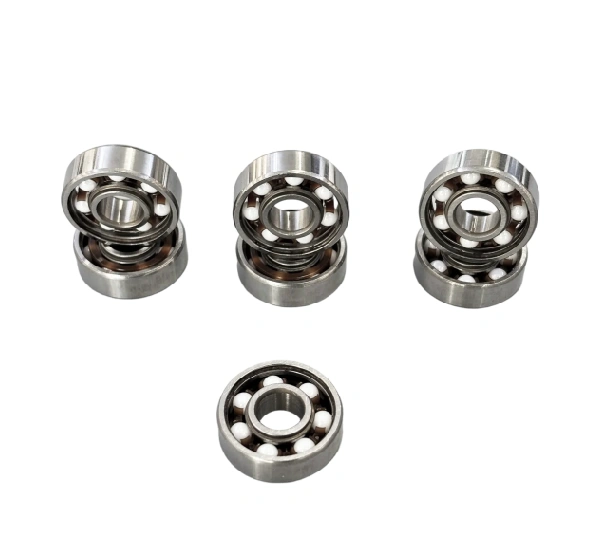
The related miniature-bearing reference lists ZZ double-shield chrome-steel bearings and RS rubber-sealed steel bearings, plus precision and colored shielded or sealed options. These bearings are used in rollers, sliding systems, decorative rollers and hardware. The catalog does not publish one universal bearing size or rating for every roller.
State the required bearing designation and confirm how it is retained inside the wheel. Shield or seal notation should be recorded on the approved bill of materials so a visually similar substitute is not accepted without review.
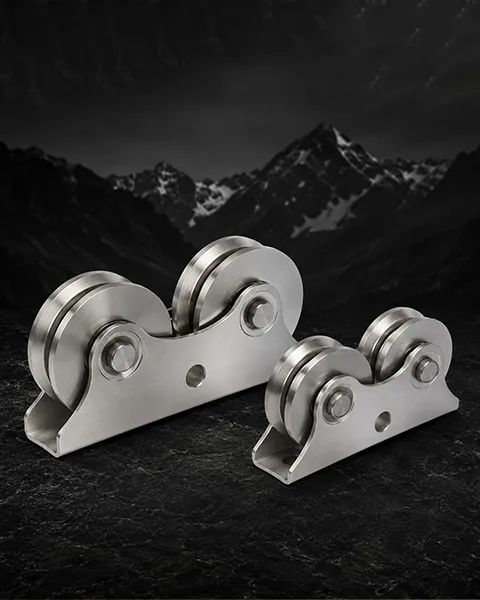
HIPAD lists carbon-steel and stainless-steel brackets, as well as adjustable and fixed types. The buyer should define bracket material, finish or treatment, mounting holes, fasteners and installation orientation. Where adjustment is required, the drawing should show the usable range and how the position is locked after alignment.
Adjustability can help compensate for installation variation, but it also creates another controlled setting. Fixed assemblies reduce that setting step but require the mounting and track geometry to be correct from the start. Neither format is universally preferable.
Request a load statement for the quoted wheel, bearing and bracket combination. Define whether the load is static or moving, how many rollers share it, where the center of gravity sits and whether thresholds, joints or impact events occur. An uneven track can temporarily shift load away from an equal distribution.
Agree on the test fixture, track section, travel, load, inspection points and acceptance criteria before sampling. The supplied reference does not disclose a universal certificate number, so any required standard or third-party evidence must be named in the RFQ.
Advantages: distributors can match wheel material, bearing arrangement, bracket and adjustment to different track systems while keeping the specification under one sourcing program. Multiple diameters and bracket formats support model-level selection.
Limits: each combination needs its own approval record. A test result from a nylon wheel with one bracket should not be applied automatically to a steel wheel, another diameter or a double-bearing assembly. Configuration changes can alter the track contact, installed height and limiting component.
The supplied HIPAD range lists nylon, POM, PU and steel. Availability and performance evidence should be confirmed for the selected model.
Do not assume so from bearing count alone. Capacity depends on the complete wheel, bearings, axle, bracket, fasteners and track interface.
The source identifies ZZ as double-shield chrome-steel bearings and RS as rubber-sealed steel bearings. Confirm the exact designation, size and fit for the roller assembly.
The family includes standard and heavy-duty track compatibility options, but the selected roller must be checked against the actual track profile and duty.
Price requires a quotation. Send the controlled configuration, quantity, validation request and packaging requirements because the source provides no universal price range.
Review HIPAD’s roller wheels and bearings et miniature ball bearings. Use the miniature bearing buyer guide et sliding door roller assembly guide for related approval checks. Send the drawing and test requirements through the HIPAD contact page.
Allen Wang is CEO and Founder of HIPAD. He began as a technical engineer in 1998 and focuses on manufacturing, tooling, quality, OEM/ODM development and architectural hardware supply.
Nous répondons sous 24 heures. Pour toute demande urgente, contactez-nous sur WhatsApp/WeChat au +86 137 9191 8989 ou appelez directement ce même numéro.
*Nous respectons la confidentialité de vos données et protégeons toutes les informations transmises.
Nous utiliserons vos informations uniquement pour répondre à votre demande et n'enverrons jamais d'e-mails non sollicités ni de messages promotionnels.