











Company
24 April 2026
 15:59
15:59 A poor bathroom door handle can cause daily trouble: hard unlocking, weak privacy, rust, loose knobs, or mismatched style. For hotels, apartments, and project bathrooms, small hardware problems become big complaints. The right bathroom door lock gives privacy, safety, and long-term comfort.
The best door handle for bathroom doors is usually a privacy door handle, privacy door knob, or bathroom lock with an inside thumb turn and an outside emergency release. A lever-style door handle is easier to use, while a knob gives a classic look. For B2B projects, choose durable door hardware with suitable material, finish, backset, latch, and lock mechanism.
What kind of door handle is best for bathroom doors?
Should you choose a door knob or lever for a bathroom?
What bathroom door lock types are commonly used?
How does a privacy door lock work?
Why is emergency release important for a bathroom lock?
What materials and finishes work well for bathroom door hardware?
How do backset, latch, and lock mechanism affect installation?
Are antique door handles suitable for modern bathrooms?
What should B2B buyers check before ordering bathroom door handles?
How can OEM/ODM customization improve bathroom door hardware projects?
The best door handle for a bathroom should provide privacy, easy operation, and safe emergency access. Most bathroom doors do not need a high-security keyed lock like an exterior door. Instead, they need a simple privacy door function that allows the user to lock the door from the inside and allow emergency opening from the outside.
For most residential, hotel, apartment, and commercial restroom projects, a bathroom door lock with a thumb turn on the inside and an emergency release on the outside is a practical choice. It gives enough privacy and security without making the room unsafe in a case of emergency.
For project buyers, the decision should not only focus on appearance. The right type of door handle should match the door thickness, backset, latch structure, finish requirement, and user group. A family bathroom, hotel bathroom, hospital restroom, school restroom, and apartment bathroom may all need slightly different door hardware solutions.
A door knob is traditional, compact, and widely used on bathrooms and bedrooms. Many buyers choose a round knob because it is simple, familiar, and cost-effective. Privacy door knobs are common for home bathrooms, guest rooms, and apartment projects.
A lever or door lever is easier to press down, especially for children, elderly users, and public or commercial spaces. Lever handles are also easier to operate when hands are wet, which makes them a strong option for bathroom use. A lever-style handle can also help create a more modern design.
Here is a simple comparison:
| Option | Best For | Advantages | Notes |
|---|---|---|---|
| Door knob | Homes, bedrooms, standard bathrooms | Compact, classic, economical | May be harder to turn with wet hands |
| Lever handle | Hotels, apartments, public projects | Easy to use, modern, user-friendly | Needs stronger spring and stable lockset |
| Lever on rose | Modern bathroom doors | Clean design, simple look | Good for minimalist interiors |
| Handle with backplate | Traditional or decorative projects | Covers more door surface | Suitable for classic designs |
For B2B projects, we usually suggest choosing based on user experience, project style, and installation habit in the target market.
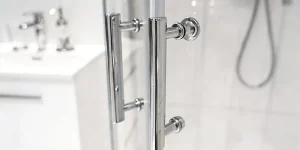
There are several common bathroom door lock types. The right choice depends on whether the door is a standard door, internal door, hotel door, apartment door, or commercial restroom door.
Common options include:
| Bathroom Lock Type | Description | Suitable Use |
|---|---|---|
| Privacy door knob | Knob with inside lock button or thumb turn | Residential bathroom doors |
| Privacy lever lockset | Lever with inside locking function | Hotels, apartments, modern homes |
| Tubular bathroom lock | Simple tubular latch and privacy function | Standard internal door projects |
| Mortice lock with thumbturn | Stronger lock body inside the door | Premium bathroom doors |
| Indicator privacy lock | Shows occupied/vacant status | Public restrooms, offices, commercial buildings |
| Door bolts | Simple extra locking option | Basic or traditional bathrooms |
A bathroom lock should be easy to use from the inside and easy to unlock from the outside when needed. For most bathroom projects, a lockable privacy function is enough. Added security is less important than safe access and smooth operation.
A privacy door lock is designed for rooms where privacy matters but high security is not required. The user can lock the door from the inside. From the outside, the lock can usually be opened without a key through a small emergency release hole, slot, or button.
The inside handle may include a thumb turn, push button, or small turn piece. The outside may include an emergency release that can be opened with a coin, pin, or screwdriver, depending on the design. This is different from an entrance door lock, which usually uses a key cylinder.
A typical privacy lock system includes:
For hotels, apartment projects, and residential developments, this kind of lockset is practical because it balances privacy, safety, and cost.
A bathroom is a private space, but it should never become a trapped space. If a child locks the bathroom, if an elderly person falls, or if a guest cannot open the lock, the door must be opened from the outside quickly.
That is why an emergency release is important. It allows another person to open the lock without damaging the door, handle, latch, or frame. For project buyers, this small feature can reduce after-sales problems and improve user safety.
A good bathroom lock should:
For B2B buyers, emergency release is not just a feature. It is part of responsible project planning.
Bathroom environments often have moisture, steam, cleaning chemicals, and frequent hand contact. So the door hardware should be durable, corrosion-resistant, and easy to clean.
Common finishes include:
| Finish | Style | Suitable Projects |
|---|---|---|
| Satin nickel | Modern and neutral | Apartments, hotels, homes |
| Polished brass | Warm and classic | Traditional villas, classic interiors |
| Matte black | Modern and bold | Contemporary bathroom doors |
| Stainless steel | Clean and durable | Commercial and high-use projects |
| Brushed finish | Soft and practical | Residential and hospitality projects |
For bathroom use, stainless steel hardware is often preferred in high-humidity or high-frequency projects. It provides a clean look and stronger resistance to moisture. Satin nickel is also popular because it matches many interior styles and does not look too bright or too dull.
As a China-based architectural hardware manufacturer, we provide door hardware, window hardware, bathroom hardware, stainless steel hardware, and stainless steel railing systems for global B2B customers. For bathroom door handle projects, material and finish control are important for both appearance and long-term performance.
Before ordering a bathroom door handle, buyers must check the backset. Backset means the distance from the edge of the door to the center of the handle hole. Common backsets vary by market and door standard. If the backset is wrong, the handle lock may not fit the door correctly.
The latch also matters. A weak latch can feel loose, noisy, or unstable. A good latch should move smoothly and hold the door closed without hard force. For high-use bathroom doors, stable latch quality can reduce complaints.
The lock mechanism should match the door type and user requirement. For example:
| Technical Point | Why It Matters |
|---|---|
| Backset | Decides whether the lock fits the pre-drilled door |
| Door thickness | Affects spindle and screw length |
| Latch type | Affects closing feel and durability |
| Lock mechanism | Affects privacy function and emergency release |
| Backplate or rose | Affects appearance and installation coverage |
| Side of the door | Helps confirm handing for some handle styles |
For large projects, checking these details before mass production can prevent installation delays.
Antique door handles can work well for classic villas, boutique hotels, heritage-style apartments, and decorative bathroom spaces. They often use finishes such as polished brass, aged bronze, or antique black to create a warmer interior feeling.
However, antique style does not mean outdated function. A modern antique-style bathroom handle can still use a reliable tubular latch, privacy thumbturn, or mortice lock mechanism. The key is to combine classic appearance with modern function.
For project buyers, antique handles should be selected carefully. Make sure the finish can handle moisture, the lockset is stable, and the style matches other bathroom hardware such as hinges, hooks, shower fittings, glass clamps, and railing accessories.
Global hardware importers, distributors, building material suppliers, system fabricators, door and window manufacturers, project contractors, architectural hardware brands, and bathroom hardware buyers should check more than the product photo.
A useful purchasing checklist includes:
| Item | What to Confirm |
|---|---|
| Product type | Knob, lever, lever on rose, handleset, privacy set |
| Function | Bathroom lock, bedroom door lock, privacy door function |
| Material | Zinc alloy, aluminum, stainless steel, brass, or custom material |
| Finish | Satin nickel, polished brass, black, chrome, brushed steel |
| Backset | Match market and door requirement |
| Door thickness | Confirm spindle and screw length |
| Latch | Smooth operation and stable closing |
| Emergency release | Required for bathroom safety |
| Packaging | Retail box, bulk packaging, private-label packaging |
| Customization | Logo, finish, size, structure, packaging |
For standard products, buyers may focus on fast delivery and stable quality. For customized projects, buyers should confirm drawings, samples, finish standards, packaging design, and inspection requirements before mass production.
OEM/ODM customization helps buyers build a product line that fits their market. For example, an importer may need a satin nickel privacy lever for apartments, a black bathroom lock for modern projects, and an antique brass doorknob for boutique hotel interiors.
Factory-direct customization can include:
For B2B buyers, customization is not only about design. It also helps create consistent product families. A door handle, door knob, bathroom lock, window hardware, shower hardware, and stainless steel railing system can share a similar style and finish. This makes the project look more complete.
As a factory-direct architectural hardware supplier, we focus on practical product matching, stable production, OEM/ODM support, and long-term cooperation for global construction and hardware supply customers.
What kind of door handle is best for bathroom doors?
A privacy door handle or bathroom lock is usually best. It should lock from the inside and allow emergency unlocking from the outside. Lever handles are easier to use, while knobs give a more traditional look.
Is a knob or lever better for a bathroom?
A lever is often easier to operate, especially with wet hands. A knob is compact and classic. For hotels, apartments, and commercial bathrooms, lever handles are often more user-friendly.
Do bathroom doors need a keyed lock?
Most bathroom doors do not need a keyed lock. A privacy lock is usually enough because bathrooms need privacy, not high security. Emergency release is more important than a key.
What is a bathroom privacy lock?
A bathroom privacy lock lets the user lock the door from inside. It can usually be opened from outside in an emergency using a small tool, coin, or release mechanism.
What finish is best for bathroom door hardware?
Stainless steel, satin nickel, matte black, chrome, and polished brass are common options. For wet or high-use spaces, corrosion-resistant and easy-clean finishes are better.
Can bathroom door handles be customized?
Yes. B2B buyers can customize material, finish, backplate, rose design, logo, packaging, latch, backset, and lock mechanism. OEM/ODM customization is useful for importers, distributors, brands, and project contractors.
A bathroom door handle should provide privacy, safety, and smooth daily use.
The best bathroom door lock usually includes an inside thumb turn and outside emergency release.
A lever handle is easier to use, while a door knob gives a classic look.
Bathroom door lock types include privacy knobs, privacy levers, tubular locks, mortice locks, and indicator privacy locks.
Moisture-resistant finishes such as satin nickel and stainless steel are practical for bathroom doors.
Backset, latch, lock mechanism, door thickness, and installation details must be confirmed before ordering.
B2B buyers should consider product function, finish consistency, packaging, customization, and project installation needs.
OEM/ODM support helps importers, distributors, brands, and contractors build more complete architectural hardware solutions.
We will reply you within 24 hours. If for urgent case, please add WhatsApp/WeChat: +86 137 9191 8989,Or call +86 137 9191 8989 directly.
*We respect your confidentiality and all information are protected.
We will only use your information to respond to your inquiry and will never send unsolicited emails or promotional messages.