













Company
16 October 2026
 11:12
11:12 Choosing the wrong sliding door can waste space, reduce comfort, and create installation problems. For homes, hotels, apartments, and commercial projects, the right door should look good, move smoothly, save space, and match the project budget.
The three common types of sliding doors are sliding glass doors, pocket sliding doors, and bypass sliding doors. Sliding glass doors are often used as patio doors, pocket doors slide into the wall to save space, and bypass doors use overlapping panels that slide horizontally on a track system. Other options include multi-slide, bi-folding, and automatic sliding doors.
What Is a Sliding Door?
What Are the Three Main Types of Sliding Doors?
What Is a Sliding Glass Door?
Why Are Sliding Patio Doors Popular for Modern Homes?
What Are Pocket Sliding Doors?
What Are Bypass Sliding Doors?
How Do Multi-Slide and Bi-Folding Door Systems Compare?
What Hardware Matters Most in a Sliding Door System?
How to Choose the Right Sliding Door for Your Project?
How Can B2B Buyers Source Reliable Sliding Door Hardware?
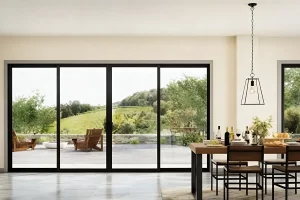
A sliding door is a type of door that opens by moving horizontally instead of swinging on a traditional hinge. It usually runs on a track system with rollers, guides, and locking hardware. This design makes it useful when a room needs a wide opening but does not have enough space for a hinged door.
Sliding doors are commonly used in patio areas, balconies, closets, bathrooms, offices, hotels, retail spaces, and modern residential projects. Because the door does not swing into the room, it helps keep the space clean and open. Andersen notes that sliding glass doors can save space because they open flush with the wall rather than swinging inward or outward.
For B2B buyers, a sliding door is more than a glass panel. It is a complete system. The frame, roller, handle, lock, seal, guide rail, stopper, and installation accessories all affect how the door performs.
The three main types of sliding doors are:
| Sliding Door Type | Main Feature | Common Use |
|---|---|---|
| Sliding glass door | Large glass panels slide along a track | Patio doors, balcony doors, garden entrances |
| Pocket sliding doors | Door panel slides into the wall pocket | Bathrooms, bedrooms, offices, space-saving rooms |
| Bypass sliding doors | Two or more panels slide past each other | Closet doors, room dividers, interior partitions |
These three sliding door types are popular because they solve different problems. A sliding glass door brings in more natural light. A pocket door hides inside the wall. A bypass door works well when several panels need to share one opening.
There are also advanced designs, such as multi-slide systems, bi-folding door systems, and automatic sliding doors. These are often used in luxury homes, commercial buildings, hotels, stores, and wide-opening architectural projects.
A sliding glass door is one of the most common patio doors. It usually includes one fixed glass panel and one moving panel, although larger designs may include three or four panels. The moving panel slides along a bottom track using a roller system.
This glass door is popular because it brings sunlight into the room and creates a visual connection between indoor and outdoor spaces. Pella explains that sliding glass doors are widely used for indoor-outdoor connection, and upgraded configurations can offer more light, better function, and better use of space.
For residential and commercial projects, glass sliding doors can be used for patios, balconies, pool areas, gardens, cafes, apartments, hotels, and office spaces. They are especially useful when buyers want a clean, modern look without using a large swing area.
Sliding patio doors are popular because they combine daylight, views, and easy access. A good sliding patio door can make a living room feel larger and brighter. It also allows people to move from the home to the patio smoothly.
For modern homes, this type of door works well because it supports open-plan layouts. Many homeowners and designers want a seamless transition between the living room and outdoor area. Sliding glass designs help create that effect without taking up extra floor space.
Energy performance is also important. Patio doors with quality frames, weather seals, and suitable glass options can help reduce heat transfer and improve comfort. ENERGY STAR explains that energy-efficient windows, doors, and skylights can help reduce energy use and improve comfort when selected and installed properly.
Pocket sliding doors slide into a wall cavity when opened. When the door is fully open, it almost disappears. This makes pocket doors one of the best space-saving choices for small rooms or narrow areas.
Pocket doors are often used in bathrooms, bedrooms, kitchens, offices, clinics, hotels, and apartments. They are also useful for interior partitions where a normal hinged door would block movement or furniture placement.
However, pocket doors require careful planning. The wall must have enough internal space for the door panel and pocket frame. The hardware also matters. If the roller, guide, or track is poor quality, the door may shake, jam, or become hard to maintain. For B2B project buyers, this means pocket doors should be matched with stable hardware from the beginning.
Bypass sliding doors use two or more panels that slide past each other. They are often found in wardrobes, closets, storage rooms, partitions, and light commercial spaces. This is a common type of sliding door for interior use.
Bypass doors are practical because they do not need wall pocket space. The panels stay inside the opening and move along parallel tracks. This makes them easier to install in many existing buildings.
The main limitation is access. Since the panels overlap, only part of the opening is fully accessible at one time. For closets and storage areas, this is usually fine. For a wide entrance, a different sliding door configuration may work better.
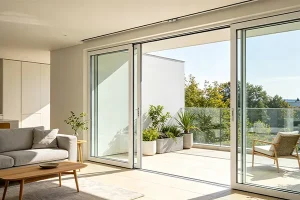
A multi-slide door is an advanced sliding system with multiple panels that slide along tracks. Some panels stack to one side. Some can slide into a wall pocket. This type of system is often used for luxury villas, hotels, restaurants, showrooms, and high-end patio projects.
A bi-folding door works differently. Its panels fold and stack to one or both sides. This can create a wider clear opening than a standard sliding door. Andersen notes that both sliding glass doors and bi-folding doors can support indoor-outdoor living, but bi-folding doors may provide a more complete opening while sliding glass doors save space along the wall.
For project buyers, the decision depends on opening size, budget, view requirements, hardware strength, sealing performance, and installation skill. Multi-slide systems often look very modern. Bi-folding systems can open very wide. Standard sliding glass doors are usually simpler and more cost-effective.
A sliding door works well only when the hardware works well. The most important parts include the roller, track, handle, lock, guide, stopper, sealing strip, frame connector, and installation accessories.
The roller is especially important. A poor roller can make the door noisy, heavy, or uneven. A strong roller helps the panels slide smoothly, even when the glass is large and heavy. For heavy-duty glass sliding systems, roller load capacity should match the door weight.
The track system also matters. A straight, strong, and corrosion-resistant track helps the panels that slide move smoothly over time. For coastal areas, humid areas, hotels, and high-use commercial buildings, stainless steel or treated hardware may be a better choice.
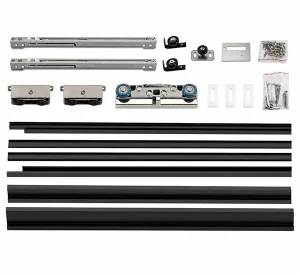
Choosing the right sliding door starts with the project space. Ask a simple question: where will this door be used? A patio needs a different design than a closet. A hotel balcony needs different hardware from an interior room divider.
Here is a practical selection table:
| Project Need | Recommended Sliding Door Type | Why It Works |
|---|---|---|
| Patio or balcony access | Sliding glass door | Good view, natural light, easy outdoor access |
| Small bathroom or bedroom | Pocket sliding door | Saves floor space |
| Closet or storage area | Bypass sliding door | Simple, practical, cost-effective |
| Large villa opening | Multi-slide door | Wide view and modern design |
| Restaurant or hotel terrace | Bi-folding door or multi-slide | Creates open indoor-outdoor space |
| Store or public entrance | Automatic sliding door | Convenient for high traffic |
You should also consider energy efficiency, water resistance, safety glass, lock design, screen doors, insect screens, frame material, and long-term maintenance. A beautiful door is not enough. The full system must work smoothly.
The advantages of sliding doors are easy to understand. They save space, look clean, and bring more light into the room. A sliding door can make a small space feel bigger because it does not need a swing area.
Sliding doors also support many styles. Some are simple and modern. Some use a grille pattern for a classic look. Some frames show the beauty of wood, while others use aluminum, stainless steel, or fiberglass for better durability.
For project contractors and distributors, sliding doors are also flexible. They can be used for interior and exterior applications, residential buildings, apartments, villas, offices, hotels, schools, hospitals, and retail spaces.
Every type of door has strengths and limits. The best door is not always the most expensive one. It is the door that fits the space, usage, and budget.
| Type | Pros | Cons |
|---|---|---|
| Sliding glass door | Bright, modern, good for patios | Needs quality glass and sealing |
| Pocket doors | Excellent space-saving design | Needs wall cavity and good installation |
| Bypass doors | Simple and affordable | Only part of opening is accessible |
| Multi-slide doors | Large opening, premium appearance | Higher hardware and installation requirements |
| Bi-folding doors | Wide opening, modern look | Needs stacking space |
| Automatic sliding doors | Good for commercial entrance use | Needs motor system and maintenance |
This is why patio door selection should include both design and hardware planning. A weak roller or poor lock can reduce the value of even the most attractive door.
For hardware importers, distributors, building material suppliers, system fabricators, door and window manufacturers, and project contractors, reliable supply is the key. A sliding door system may include many small parts. If one part fails, the whole door experience suffers.
As a China-based architectural hardware manufacturer, we provide door hardware, window hardware, bathroom hardware, stainless steel hardware, and stainless steel railing systems. We support OEM/ODM customization and factory-direct production for global B2B architectural, construction, and hardware supply customers.
When sourcing sliding door hardware, buyers should check:
For architectural hardware brands and project buyers, this selection process helps reduce complaints, improve installation efficiency, and create a better user experience.
Imagine a hotel project with 200 rooms. Each room needs a sliding glass door leading to a balcony. The door must look clean, resist corrosion, move smoothly, and close securely. The buyer cares about price, but also about long-term maintenance.
If the project uses low-quality rollers, guests may complain that the door is heavy or noisy. If the seal is poor, wind and water may enter. If the lock is weak, safety becomes a concern.
A better solution is to match the door with tested rollers, strong tracks, reliable locks, and proper sealing parts. The result is simple: smoother opening, fewer service calls, and better guest comfort. For a project buyer, that is real value.
What are the three main types of sliding doors?
The three main types are sliding glass doors, pocket sliding doors, and bypass sliding doors. Sliding glass doors are often used as patio doors, pocket doors slide into a wall cavity, and bypass doors use panels that slide past each other.
Which sliding door is best for a patio?
A sliding glass door is usually the best choice for a patio because it provides natural light, outdoor views, and easy access. For larger patio openings, multi-slide or bi-folding door systems may also be suitable.
Are pocket sliding doors good for small rooms?
Yes. Pocket doors are perfect for small rooms because they slide into the wall and do not use floor space. They are common in bathrooms, bedrooms, offices, and apartments.
What is the difference between bypass doors and pocket doors?
Bypass doors slide past each other on parallel tracks. Pocket doors slide into the wall. Bypass doors are easier to use in closets, while pocket doors are better when you want the door to disappear when open.
Are sliding doors energy-efficient?
Sliding doors can be energy-efficient when they use quality frames, proper seals, and suitable glass. For exterior patio doors, glass options such as double-pane or triple-pane glass can help improve insulation.
Can sliding door hardware be customized?
Yes. Sliding door hardware can be customized for size, finish, load capacity, material, packaging, and brand requirements. OEM/ODM customization is useful for importers, distributors, and architectural hardware brands.
The three main types of sliding doors are sliding glass doors, pocket sliding doors, and bypass sliding doors.
Sliding glass doors are common for patio doors, balconies, and outdoor views.
Pocket sliding doors are ideal for space-saving interior design.
Bypass doors are practical for closets, storage areas, and room dividers.
Multi-slide and bi-folding systems are useful for wide openings and premium projects.
Good hardware is essential for smooth movement, safety, and long service life.
Rollers, tracks, locks, handles, and seals should be selected based on door weight and project use.
For B2B buyers, a reliable architectural hardware manufacturer can provide standard products, OEM/ODM customization, and stable factory-direct supply.
We will reply within 24 hours. For urgent requests, contact us on WhatsApp/WeChat at +86 137 9191 8989 or call the same number directly.
*We respect your confidentiality, and all information is protected.
We will only use your information to respond to your inquiry and will never send unsolicited emails or promotional messages.