


Open & hold
Friction Stays
Standard, top-hung and heavy-duty stays, 8–24 in, 4-bar and 5-bar, in SS304, SS201 or SS410.
Aluminum window hardware is the set of parts that lets a window sash open, hold, close and lock: friction stays or hinges for casement and top-hung windows, rollers for sliding windows, locks and handles, corner joints that hold the profile frame together, and weatherstrips. HIPAD manufactures this hardware for aluminum and uPVC window systems, including friction stays in SS304, SS201 and SS410 from 8 to 24 inches. Window factories, profile system companies and distributors in 60+ countries buy complete sets or single parts from our factory.

An aluminum window is built from extruded profiles, glass and a small set of hardware parts. The hardware does four jobs. Open and hold: friction stays, hinges and restrictors on opening windows, rollers on sliding windows. Lock: crescent locks, keyed locks, lock handles and multi-point locking. Build the frame: corner joints and connectors that join the profiles at each corner. Seal: weatherstrips and brush seals that keep out wind, rain, dust and noise.
The window type decides which parts are needed, and the profile system decides the exact sizes. In Spanish-speaking markets the set is called herrajes para ventanas de aluminio, friction stays are brazos de fricción or compases, and corner joints are escuadras.
Quick answer: a casement (side-hung) window needs two friction stays or hinges, a handle and lock points; a top-hung (awning) window needs two top-hung friction stays and a handle; a sliding window needs two rollers per sash, a crescent lock or lock handle and interlock seals. Every type needs corner joints and weatherstrips.
| Window type | Opening hardware | Locking | Frame and seal | Typical use |
|---|---|---|---|---|
| Casement (side-hung) | 2 friction stays or 2–3 hinges, optional restrictor | Casement handle with cam or multi-point lock | 4 corner joints per sash, weatherstrip | Homes, offices, high-rise |
| Top-hung (awning) | 2 top-hung friction stays | Handle at the bottom rail, lock points | 4 corner joints, weatherstrip | Bathrooms, kitchens, ventilation lights, curtain walls |
| Sliding window | 2 rollers per sash, guides | Crescent lock, lock handle or keyed lock | 4 corner joints, interlock and brush seals | Homes and apartments, especially in Latin America, the Middle East and Asia |
| Fixed light | None | None | Corner joints, glazing seals | Next to opening sashes |
Each range has its own page with models and specifications. Send your profile drawing and we match every part to it.
Standard, top-hung and heavy-duty stays, 8–24 in, 4-bar and 5-bar, in SS304, SS201 or SS410.

Stainless steel and alloy hinges for aluminum, casement and sliding window systems, 2–6 mm leaves.
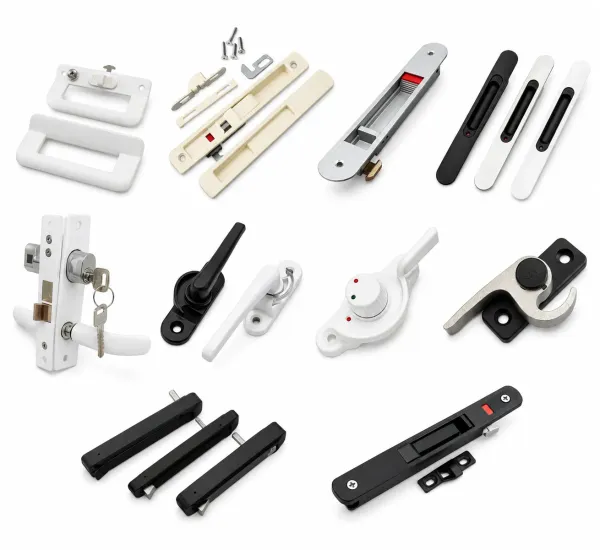
Keyed locks for aluminum and sliding windows where security or child safety matters.
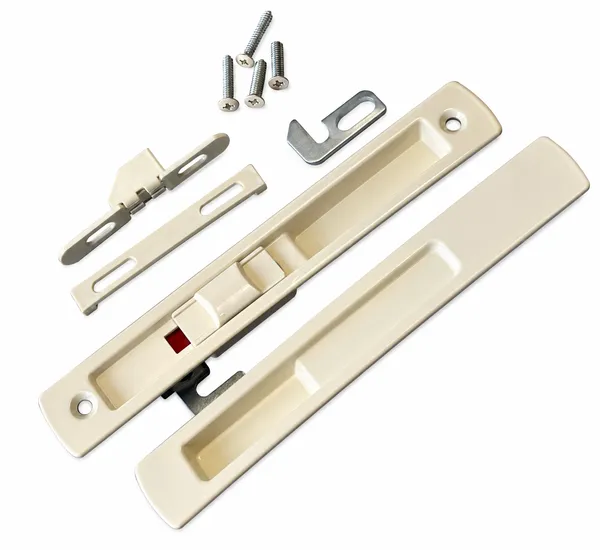
Compact lock handles that open and lock aluminum sliding windows in one part.

Casement handles, flush handles and handle sets in aluminum and zinc alloy.

Quiet nylon wheels in brackets for aluminum and uPVC sliding windows. See also the roller guide.

Corner joints and brackets in aluminum, zinc alloy and steel; see also aluminum corner joints.

Weatherstrips, brush seals and screen window parts that keep out wind, dust and noise.
A friction stay (also called a friction hinge or window stay) is a folding steel arm that carries the sash, guides it as it opens and holds it at any angle by friction. It replaces hinges on most aluminum casement and top-hung windows. Choose it by window type, sash size and environment.
| Stay type | Use |
|---|---|
| Standard (side-hung) stay | Casement windows that open to the side |
| Top-hung stay | Awning windows that open from the bottom |
| Heavy-duty stay | Large sashes and high wind loads |
| 4-bar stay | Standard sashes |
| 5-bar stay | Heavier sashes; extra arm adds support |
| Material | Corrosion resistance | Best for |
|---|---|---|
| SS304 | High | Humid, coastal and high-rise projects (for example HDH65) |
| SS201 | Medium | Dry inland projects and budget lines |
| SS410 | Lower; hard and wear-resistant | Indoor and sheltered windows where cost matters |
| Stay length | Typical sash dimension* |
|---|---|
| 8 in (≈ 200 mm) | Up to about 400 mm |
| 10 in (≈ 250 mm) | About 400–500 mm |
| 12 in (≈ 300 mm) | About 450–600 mm |
| 16 in (≈ 400 mm) | About 550–750 mm |
| 20 in (≈ 500 mm) | About 700–900 mm |
| 24 in (≈ 600 mm) | About 850–1100 mm |
| Lock or handle | Window | Specification |
|---|---|---|
| Crescent lock | Sliding windows | Fits the meeting rails; aluminum, chrome or black |
| Sliding window lock handle | Sliding windows | Combined pull and lock |
| Flush handle | Sliding windows | Aluminum, for 30–60 mm sash frames |
| Casement window handle | Casement and top-hung | Aluminum or zinc alloy, 40–70 mm frames |
| Window lock with key | All types | Adds security and child safety |
| Multi-point lock rods | Large casements, high-rise | Several locking points along the sash |
See the crescent window lock guide and the door and window lock range.
Most sliding window sashes run on two rollers, one near each end of the bottom rail. Window rollers usually have nylon or POM wheels with a small ZZ bearing for quiet running, in nylon or steel brackets shaped to the profile cavity. Typical sashes weigh 20–40 kg; heavier sashes need double-wheel rollers.
Match the wheel groove to the track and the bracket to the sash cavity. Our sliding door and window roller guide explains wheel materials, bearings and load step by step.

Corner joints are inserts that join two mitred profiles at each corner of a frame or sash. They keep the window square, carry load across the corner and make assembly fast and repeatable.
| Type | Fixing | Material |
|---|---|---|
| Standard corner joint | Screw or press-fit (crimped) | Aluminum, zinc alloy |
| Corner bracket | Screw fixing, L-shape | Zinc alloy, steel |
| Angle bracket | Screw fixing, heavy-duty | Steel, alloy |
| Internal connector | Hidden in the profile | To your profile |
HIPAD corner joints such as HDJ02 and HDJ37 fit the most common international aluminum window systems. Standard MOQ for corner joints is 10,000 pcs.
| Part | Casement sash | Top-hung sash | Sliding sash |
|---|---|---|---|
| Friction stays | 2 | 2 (top-hung type) | — |
| Rollers | — | — | 2 |
| Handle | 1 | 1 | 1 or lock handle |
| Lock / keepers | By lock points | By lock points | 1 crescent lock |
| Corner joints | 4 | 4 | 4 |
| Restrictor (optional) | 1 | 1 | — |
| Seals | By perimeter | By perimeter | Interlock + brush |
See high-rise window solutions for the complete system approach.
| Problem | Likely cause | Fix |
|---|---|---|
| Sash drops or rubs the frame | Stay too short or worn | Use a longer or heavy-duty stay |
| Window will not stay open | Friction set too low | Adjust or replace the friction shoe |
| Rusty stays | 201 or 410 in a wet climate | Change to SS304 |
| Sliding sash hard to move | Worn rollers or dirty track | Clean the track; replace rollers |
| Lock does not pull the sash closed | Keeper out of position | Reset the keeper; check sash alignment |
| Draughts and noise | Worn or wrong weatherstrip | Replace with the correct profile |
HIPAD started in 2000 with bearings and rollers and grew into a full door and window hardware factory. Friction stays, locks, handles, rollers and corner joints are produced and checked under one quality system, so a window factory can source a complete, matched hardware set from one supplier.
HIPAD is ISO 9001 certified, and applicable products carry CE, GS and CSA C-UL certification. SGS or BV third-party inspection is available.
| 1. Profile or sample | Send the profile drawing, window type and sash sizes |
|---|---|
| 2. Samples | 5–7 days for existing models |
| 3. Production | 20–25 working days |
| 4. Shipment | FOB Qingdao or any China port · 30% deposit, 70% before shipment |
| Term | Meaning | Also called |
|---|---|---|
| Friction stay | Folding arm that carries a sash and holds it open by friction | Friction hinge, window stay, compás, brazo de fricción |
| Casement window | Side-hung window that opens like a door | Side-hung window |
| Top-hung window | Window hinged at the top that opens outward from the bottom | Awning window |
| Crescent lock | Rotating cam lock on sliding window meeting rails | Sash lock, cam lock |
| Corner joint | Insert that joins two profiles at a corner | Corner cleat, escuadra |
| Restrictor | Device that limits how far a window opens | Opening limiter |
| Keeper | Part on the frame that a lock engages | Strike |
| Weatherstrip | Seal around the sash or frame | Gasket, burlete |
An opening aluminum window needs friction stays or hinges (or rollers for sliding windows), a handle, a lock or crescent lock with keepers, four corner joints per sash and weatherstrips. Restrictors and multi-point locks are added for safety and large sashes.
A friction stay is a folding stainless steel arm fitted in the frame and sash of a casement or top-hung window. It carries the sash, guides it as it opens and holds it at any angle by friction, replacing ordinary hinges.
Choose the stay length by sash width for side-hung windows and by sash height for top-hung windows. As a guide, 10 in stays suit sashes of about 400–500 mm and 16 in stays about 550–750 mm. Heavy sashes need heavy-duty or 5-bar stays. HIPAD makes stays from 8 to 24 in.
SS304 stainless steel is best for humid, coastal and high-rise projects because it resists rust. SS201 suits dry inland projects at lower cost, and SS410 is a hard, economical choice for sheltered windows.
A 5-bar stay has an extra arm that supports heavier sashes and keeps them more stable when open. 4-bar stays suit standard sashes.
Most aluminum sliding windows use a crescent lock on the meeting rails, a lock handle that combines pull and lock, or a keyed window lock for extra security.
Yes. Models such as HDJ02 and HDJ37 are designed for the most common international aluminum window systems, and we can make corner joints to your profile drawing. Standard MOQ for corner joints is 10,000 pcs.
Yes. Send the profile drawing, window types and sash sizes. We match friction stays, hinges, locks, handles, rollers, corner joints and seals, and can pack them per window or in bulk.
HIPAD is a manufacturer founded in 2000 in Qingdao, China, producing door and window hardware with its own molds, injection machines and QC. HIPAD is ISO 9001 certified. Qingdao Hipad International Trade Co., Ltd. handles export.
A door and window hardware factory since 2000, supplying window factories, profile system companies, distributors and contractors in 60+ countries. Our commitment includes:
Send your profile drawing, window types and sash sizes. We reply within 24 hours with a matched hardware list and a factory price.
We will reply within 24 hours. For urgent requests, contact us on WhatsApp/WeChat at +86 137 9191 8989 or call the same number directly.
*We respect your confidentiality, and all information is protected.
We will only use your information to respond to your inquiry and will never send unsolicited emails or promotional messages.
 Sliding Door & Window Rollers
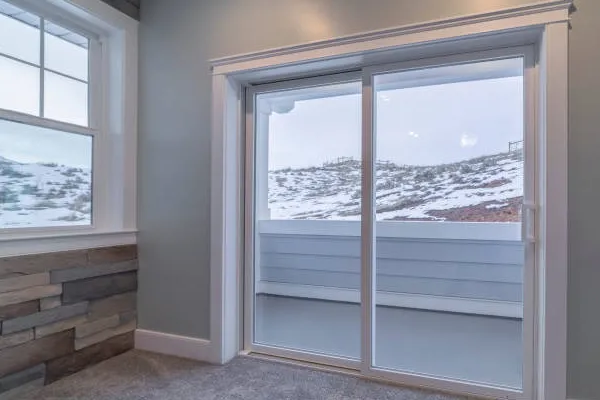 Sliding Door Hardware
 Door & Window Locks
 High-Rise Window Solutions