













Bedrijf
16 October 2026
 10:09
10:09 Allen Wang | CEO and Founder, HIPAD
Updated: October 14, 2026
A sliding door roller strip should be specified with its track, not as an isolated wheel. HIPAD’s published range includes nylon, plastic and metal wheel options, bearing variants and custom diameters, but it does not assign one universal load rating or size to every assembly. Use the checks below to define a model that can be tested in your actual system.
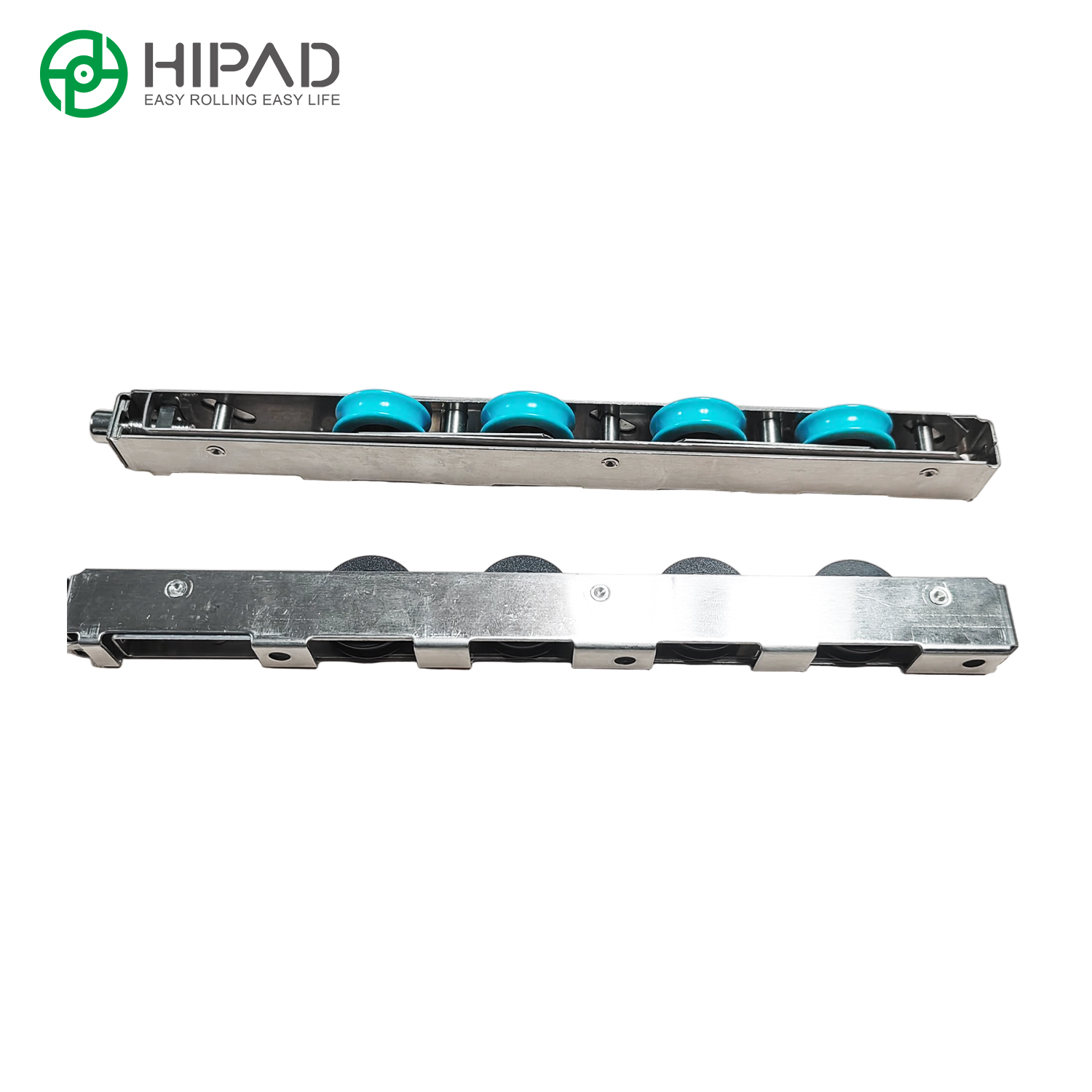
The supplied HIPAD product reference describes nylon roller wheels, bearing rollers, pulley wheels and small roller components. Materials include nylon, plastic, steel or other metal options. It lists single, ball and standard bearing options, custom diameters, and multiple finish or color options. The related sliding track and strip roller family covers linear and embedded strip rollers, track guides, compact rollers, multi-wheel and double-wheel layouts, and embedded or side-mounted arrangements. These are family options, not a promise that every combination is available as one model.
| Specification field | Published family options | What the buyer must confirm |
|---|---|---|
| Wheel material | Nylon, plastic, steel or metal | Exact grade and wheel drawing for the quoted model |
| Lager | Single, ball or standard bearing options | Designation, count, closure and retention method |
| Wheel diameter | Custom diameters available | Diameter, width, tolerance and track contact profile |
| Strip layout | Linear, embedded, compact, multi-wheel or double-wheel | Wheel spacing, installed height and mounting orientation |
| Mounting | Embedded or side-mounted arrangements in the related range | Fixing centers, fasteners and available cavity |
| Finish and color | Multiple options | Approved sample and documented finish for repeat orders |
| Load and durability | No universal numeric rating disclosed | Model-specific declared load and agreed test conditions |
Send a section drawing of the track with internal width, running surface, clearance, rail transitions and installation orientation. Record the door mass, number of roller positions and where the panel’s center of gravity sits. A wheel that looks correct beside an unmounted track can bind once the door is installed or the track is slightly out of level.
Do not approve a substitute solely because its nominal diameter matches. Tread shape, flange clearance, axle position and bracket projection can change the running height. Check a production-intent sample on a representative length of the actual track, including joints and end stops.
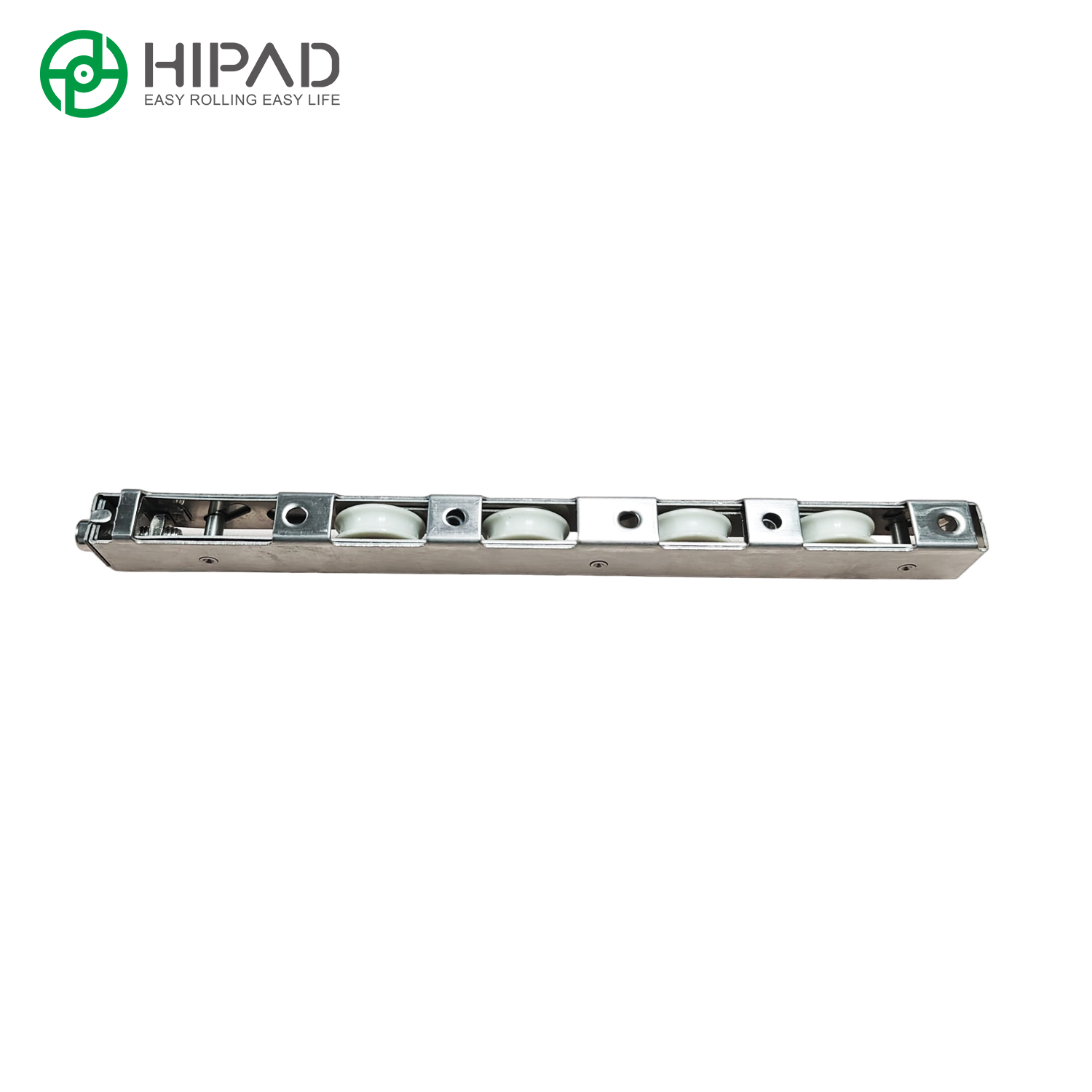
HIPAD lists nylon and other plastic or metal wheel choices. Choose the material against the track material, operating environment and buyer’s acceptance criteria. The published reference does not provide a universal noise, wear or corrosion figure for these variants, so request model-level evidence before making a performance claim.
The bearing designation belongs on the drawing and bill of materials. A single or ball-bearing label alone does not establish capacity or service life. Confirm the bearing’s dimensions, closure, fit in the wheel, axle arrangement and replacement policy. If a different bearing is proposed after sampling, treat it as a controlled change and repeat the fit check.
The related sliding track and strip roller systems include linear, embedded, compact, multi-wheel and double-wheel formats. Embedded and side-mounted arrangements call for different cavity and fixing details. Record wheel spacing and the full strip length; a multi-wheel assembly does not automatically share load evenly if the track or mounting face is uneven.
For an existing door, measure the available cavity and fastener centers before choosing a replacement. For a new OEM program, approve the roller strip and track together. The Sliding Door Roller Strip product range is a starting point, but the accepted configuration must be named on the purchase drawing.
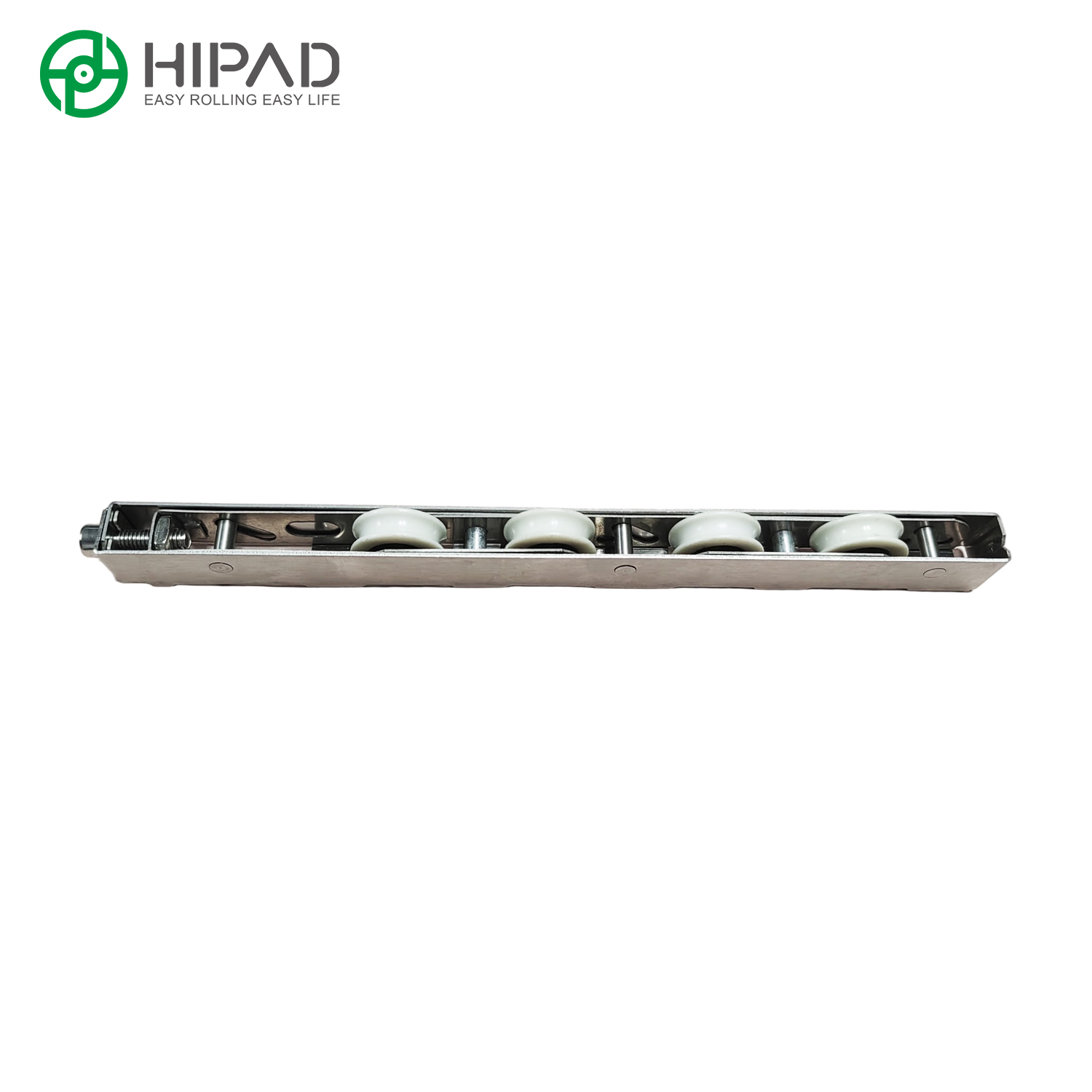
For adjacent wheel and bearing choices, compare HIPAD’s roller wheels and bearings en miniature ball bearings. De sliding door roller assembly guide covers complementary bracket and track checks.
No universal diameter is disclosed in the supplied range. HIPAD lists custom diameter options; specify the exact wheel dimensions and tolerances for the chosen track.
Wheel count alone does not establish capacity. Ask for a declaration and test method for the complete model, including its mounting and track.
A catalog sample can start discussion, but approval requires the actual track section and installed clearances. This is especially important for replacement work.
The supplied product reference does not disclose a certificate number or issuing body. State any required test or documentation in the RFQ and verify the response for the selected model.
Share your track section, door mass, mounting drawing, target configuration and sample acceptance criteria through the HIPAD contact page. Ask for a model-specific drawing and quotation; the supplied material does not publish a universal price.
Allen Wang is CEO and Founder of HIPAD. His background began in bearing manufacturing and technical engineering in 1998, and his work covers tooling, quality and OEM/ODM architectural hardware development.
Wij antwoorden binnen 24 uur. Neem voor dringende aanvragen contact met ons op via WhatsApp/WeChat op +86 137 9191 8989 of bel rechtstreeks naar hetzelfde nummer.
*Wij behandelen uw gegevens vertrouwelijk en beschermen alle informatie.
Wij gebruiken uw gegevens uitsluitend om op uw aanvraag te reageren en sturen nooit ongevraagde e-mails of promotionele berichten.